
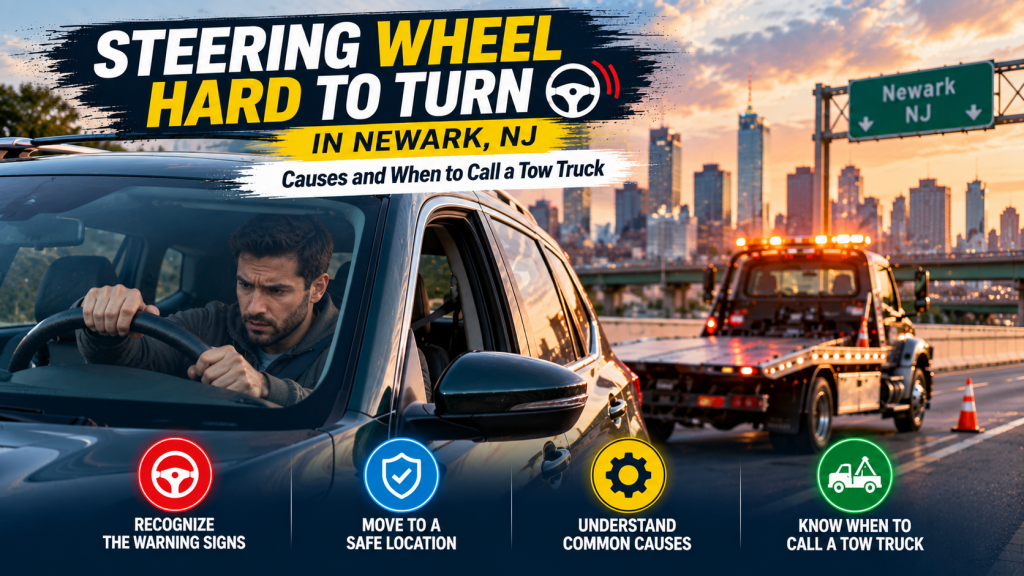
Imagine driving through Newark, New Jersey, when your steering wheel suddenly becomes difficult to turn. You try to make a normal turn, but the wheel feels unusually stiff or requires much more effort than usual. This can be frightening, especially when driving through busy intersections, crowded streets, or highway traffic.
A steering wheel that is hard to turn in Newark, NJ, may indicate a power steering problem, low power steering fluid in a hydraulic system, a failing belt, an electrical fault, or another mechanical issue. Because steering is essential for controlling your vehicle, unexpected steering difficulty should never be ignored.
In this guide, We Care Towing & Transport explains common causes of a stiff steering wheel, important warning signs, what to do when steering becomes difficult, and when professional towing may be the safest option.
Why Is My Steering Wheel Hard to Turn?
Modern vehicles use different steering systems. Some use hydraulic power steering, while others use electric power steering. Some vehicles use electro-hydraulic systems or other configurations.
These systems help drivers turn the steering wheel without excessive effort. When a component fails or assistance is reduced, steering may become unusually heavy.
You might notice:
- The steering wheel is harder to turn when parking.
- Steering suddenly becomes stiff while driving.
- The steering feels heavier when making tight turns.
- A power steering warning light appears.
- You hear whining, squealing, or grinding noises.
- Steering effort changes unexpectedly.
- The steering wheel becomes difficult to control.
The exact cause depends on your vehicle and the circumstances. If steering becomes difficult unexpectedly, prioritize safety rather than trying to diagnose the problem while driving.
7 Common Causes of a Steering Wheel That Is Hard to Turn
1. Low Power Steering Fluid
Some vehicles use hydraulic power steering, which relies on fluid to provide steering assistance. If the fluid level becomes too low, steering may become heavy or noisy.
Possible causes include a leak, a damaged hose, or another problem within the hydraulic system.
Warning signs may include a whining noise while turning, fluid underneath the vehicle, or increased steering effort at low speeds.
If you suspect a leak, do not assume adding fluid will solve the problem permanently. A qualified mechanic should identify the cause and check the system.
Important: Not every vehicle uses hydraulic power steering fluid. Electric power steering systems generally do not use this type of fluid, so always follow your vehicle manufacturer’s instructions.
2. Electric Power Steering Failure
Many modern vehicles use electric power steering rather than a conventional hydraulic system.
An electric power steering system may develop problems involving its motor, sensors, wiring, control module, or electrical power supply.
You might notice that steering assistance suddenly decreases or that a power steering warning light appears on the dashboard.
If the steering wheel becomes unexpectedly heavy, do not continue driving if you cannot control the vehicle safely. Pull over when possible and arrange professional assistance.
A diagnostic scan and inspection may be needed to identify the specific fault.
3. A Failing Drive Belt
Some hydraulic power steering systems rely on an engine-driven belt to operate the steering pump. If the belt becomes damaged, loose, or broken, steering assistance may be reduced or lost.
You might hear a squealing noise, notice a change in steering effort, or see other warning signs depending on the vehicle.
On some vehicles, the same belt also drives other important components. A broken belt may therefore cause additional problems, including engine overheating or charging-system issues.
If steering becomes stiff and you notice unusual noises or warning lights, stop in a safe location. Do not attempt to continue driving simply because the engine is still running.
4. A Weak Battery or Charging System Problem
Electric power steering depends on the vehicle’s electrical system. A weak battery, alternator problem, damaged wiring, or another electrical fault may affect steering assistance in some vehicles.
Possible warning signs include a battery warning light, dim headlights, multiple dashboard warnings, or steering that suddenly becomes heavy.
These symptoms can have different causes, and the presence of a battery warning light does not automatically mean the battery itself is faulty.
If steering difficulty occurs alongside electrical warnings, arrange a professional inspection. If the vehicle cannot be steered safely, towing is preferable to continuing the journey.
5. Steering Rack or Steering Component Problems
The steering rack and related components help translate steering wheel movement into the movement of the front wheels.
Wear, damage, or a mechanical fault can make steering difficult or inconsistent. You may also hear unusual noises, notice excessive play, or experience uneven steering response.
Because these components directly affect vehicle control, a suspected steering rack or steering linkage problem deserves prompt professional attention.
Do not try to force the steering wheel or continue driving a vehicle with unpredictable steering behavior.
6. Tire Pressure or Tire-Related Problems
Incorrect tire pressure can affect steering effort and vehicle handling. A severely underinflated tire may make steering feel heavier, especially at lower speeds.
A damaged tire or another wheel-related problem can also change how the vehicle responds to steering inputs.
If you notice a sudden change in steering, look for warning signs only when you are safely parked away from traffic. Do not stand in an active traffic lane to inspect a tire.
If the vehicle pulls strongly to one side, has a damaged tire, or feels unstable, stop driving and seek assistance.
For more information, read our related guide on car shaking while driving in Newark, NJ.
7. Suspension or Front-End Problems
Suspension and front-end components help the vehicle move and respond properly to steering inputs. Damaged or worn parts may contribute to stiff steering, unusual noises, poor handling, or uneven tire wear.
You might notice that the steering feels different after hitting a pothole, curb, or road debris.
A sudden change after an impact should be taken seriously, especially if the steering wheel is difficult to turn or the vehicle no longer tracks normally.
A professional inspection can determine whether the steering, suspension, tires, or another component is responsible.
What Should You Do If Your Steering Wheel Suddenly Becomes Stiff?
When steering becomes difficult while driving, your first priority is to maintain control and avoid creating a dangerous situation.
Step 1: Stay Calm and Maintain Control
Keep both hands on the steering wheel and avoid sudden steering movements.
The vehicle may still respond, but it could require more effort than usual. Do not make abrupt lane changes or attempt sharp turns to reach a nearby parking area.
Step 2: Reduce Speed Gradually
If traffic and road conditions allow, ease off the accelerator and slow down gradually.
Avoid harsh braking unless necessary to prevent a collision. Pay attention to surrounding vehicles and look for a safe place to stop.
Step 3: Move to a Safe Location
If you can maintain control, move out of the travel lane when safe and stop in a suitable location.
If the steering becomes so difficult that you cannot control the vehicle safely, prioritize avoiding a collision and seek emergency assistance when necessary.
On a highway, do not suddenly cross multiple lanes to reach the shoulder. Never walk across active traffic lanes to seek help.
Step 4: Check for Warning Signs Once Parked
After stopping safely, look for dashboard warnings and note any unusual noises, leaks, or other symptoms.
Do not crawl underneath the vehicle or touch moving engine components. If you suspect a fluid leak, do not assume the problem is safe to ignore.
Step 5: Decide Whether Towing Is Necessary
If steering remains stiff, becomes unpredictable, or is accompanied by serious warning signs, do not drive to a repair shop.
Professional towing may be the safest way to transport the vehicle for inspection. Tell the provider about the steering problem so the appropriate equipment and loading procedure can be considered.
For further information, visit our car towing service in Newark, NJ page.
Is It Safe to Drive With a Stiff Steering Wheel?
It depends on the cause and severity, but a sudden or significant change in steering effort can make the vehicle difficult to control.
Do not continue driving if:
- The steering wheel suddenly becomes extremely heavy.
- You struggle to turn the vehicle or maintain your intended direction.
- The steering response is inconsistent or unpredictable.
- A steering warning light appears alongside a noticeable change in handling.
- You hear severe mechanical noises while turning.
- The problem starts after a collision or impact.
- You notice additional warning signs suggesting a serious mechanical fault.
Even if the vehicle still moves, it may not be safe to drive in busy Newark traffic.
If the steering problem is persistent or unexplained, have the vehicle inspected before returning to normal driving.
Why Steering Problems Can Be Dangerous in Newark, NJ
Driving around Newark may involve crowded intersections, stop-and-go traffic, parking maneuvers, highway entrances, and narrow urban streets.
A stiff steering wheel can make ordinary maneuvers more difficult. Turning into a parking space, changing direction, or responding to an unexpected hazard may require more effort and time.
The risk can increase when traffic is moving quickly or there is little room to stop safely.
If your vehicle develops a steering problem during your journey, avoid unnecessary maneuvers and prioritize reaching a safe stopping location. If you cannot control the vehicle safely, seek appropriate emergency assistance.
Continuing to drive in the hope that the steering will return to normal may put you and other road users at risk.
How We Care Towing & Transport Can Help
When steering problems make a vehicle unsafe to drive, We Care Towing & Transport provides towing assistance for drivers in Newark, NJ, and surrounding areas.
A towing professional can help transport a disabled vehicle to a repair facility or another suitable destination. The appropriate recovery method depends on the vehicle’s condition, drivetrain, and manufacturer’s instructions.
When requesting assistance, be prepared to share:
- Your location or nearest cross street.
- Your vehicle’s make, model, and approximate year.
- Whether the steering became stiff suddenly or gradually.
- Any dashboard warning lights.
- Any unusual noises, fluid leaks, or recent road impacts.
- Whether the vehicle is parked, on a local street, or on a highway.
This information helps the provider understand the situation and consider the appropriate recovery approach.
Learn more about our services at We Care Towing & Transport.
How to Help Prevent Steering Problems
Not every steering system failure can be prevented, but routine maintenance may help identify certain problems before they become serious.
Follow your vehicle manufacturer’s recommended service schedule and address warning lights promptly.
Other useful precautions include:
- Check tire pressure according to the manufacturer’s recommendations.
- Have unusual steering noises inspected.
- Address fluid leaks in hydraulic steering systems.
- Ask a qualified mechanic to inspect damaged belts when applicable.
- Investigate recurring battery or charging-system warnings.
- Have the steering and suspension inspected after a significant impact.
- Check for applicable safety recalls through the official NHTSA recall lookup.
Avoid ignoring changes in steering effort, even if the vehicle seems to handle normally again. Intermittent symptoms can still indicate a developing problem.
Frequently Asked Questions
1. Why is my steering wheel hard to turn all of a sudden?
Possible causes include a loss of power steering assistance, an electrical fault, a hydraulic fluid leak, a damaged belt, or a mechanical steering problem. The exact cause depends on your vehicle and requires proper inspection.
2. Can low power steering fluid make the steering wheel stiff?
Yes, in vehicles equipped with hydraulic power steering, low fluid can reduce steering assistance. A leak or another system fault may be responsible. Electric power steering systems generally do not use hydraulic steering fluid.
3. Is it safe to drive with a hard-to-turn steering wheel?
If steering has suddenly become difficult or unpredictable, it is safest to stop in a suitable location and arrange professional assistance. Continuing to drive may make it harder to respond to traffic and road hazards.
4. Why is my steering wheel hard to turn when parking?
Low-speed steering requires more assistance. Hydraulic system problems, electric power steering faults, tire pressure issues, or mechanical component problems may make parking more difficult. A professional inspection can identify the cause.
5. Can a weak battery affect power steering?
In some vehicles, electrical system problems can affect electric power steering assistance. If steering becomes heavy alongside battery warnings or other electrical symptoms, stop safely and arrange an inspection.
6. Should I call a tow truck if my power steering stops working?
If steering becomes too difficult to control safely, or the problem is accompanied by serious warning signs, professional towing is a sensible option. Explain the steering issue when arranging assistance.
7. Where can I get towing assistance in Newark, NJ?
Visit We Care Towing & Transport to learn more about towing assistance for disabled vehicles in Newark and nearby areas.
Final Thoughts
A steering wheel that suddenly becomes hard to turn can indicate a problem with power steering assistance, electrical components, tires, suspension, or the steering mechanism itself.
If you experience steering difficulty in Newark, NJ, stay calm, slow down when safe, and move away from traffic if possible. Do not continue driving if you cannot control the vehicle reliably.
When steering problems make your vehicle unsafe, We Care Towing & Transport can help you explore towing assistance so the vehicle can be transported for professional inspection.
Your ability to steer safely is essential. Never ignore a sudden change in steering performance.
Learn more at wecaretransportnj.com.