
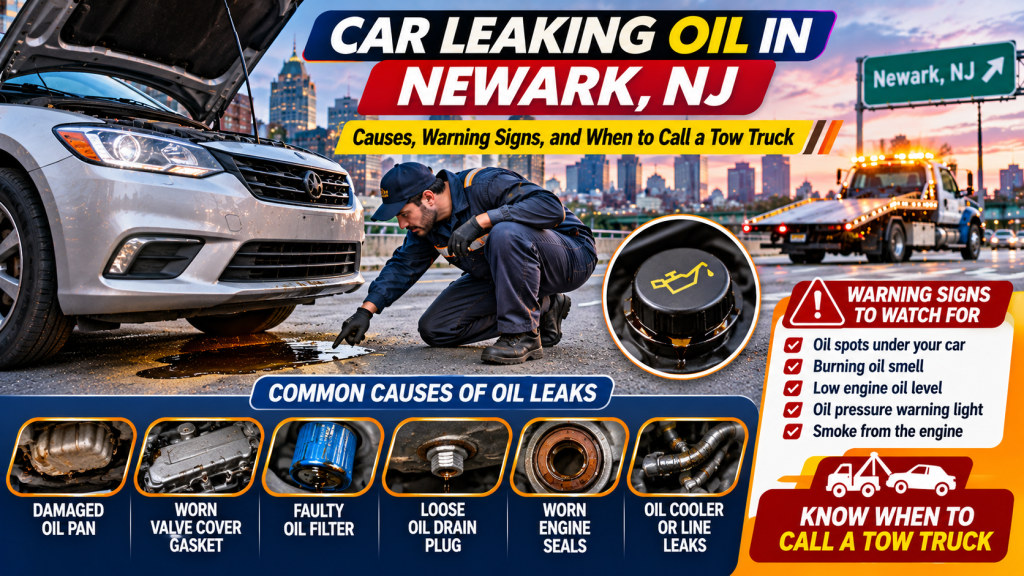
Have you noticed dark spots or oily puddles underneath your vehicle after parking in Newark, New Jersey? An oil leak may seem like a small problem at first, but ignoring it can lead to low engine oil levels, overheating, and potentially expensive engine damage.
If your car is leaking oil in Newark, NJ, the cause could be a damaged oil filter, worn gasket, loose drain plug, leaking oil pan, or another engine-related issue.
Some leaks develop slowly, while others can cause a significant amount of oil to escape in a short time. Recognizing the warning signs and knowing when to stop driving can help protect your vehicle.
In this guide, We Care Towing & Transport explains common causes of engine oil leaks, how to recognize possible symptoms, and when professional towing may be the safest option.
How Do You Know If Your Car Is Leaking Oil?
One of the easiest signs of an oil leak is a dark or oily stain underneath your parked vehicle.
However, not every fluid underneath a car is engine oil. Vehicles use several fluids, including coolant, transmission fluid, brake fluid, and water from air conditioning condensation.
Engine oil may appear amber, brown, or nearly black depending on its age and condition.
Other possible warning signs include:
- Dark oily spots on your driveway or parking space.
- A burning oil smell while driving.
- Smoke coming from the engine compartment.
- An illuminated oil pressure warning light.
- Engine oil levels dropping repeatedly.
- Unusual engine noises.
- Visible oil around the engine or underneath the vehicle.
If you notice these symptoms, avoid assuming the leak is minor. A qualified mechanic can identify the source and determine whether the vehicle is safe to operate.
7 Common Reasons Your Car Is Leaking Oil
1. Worn or Damaged Valve Cover Gasket
The valve cover gasket helps seal the upper part of the engine and prevent oil from escaping.
Over time, heat and normal engine operation can cause the gasket to become brittle, worn, or damaged.
When this happens, oil may leak around the top or sides of the engine.
Possible warning signs include:
- Oil around the valve cover.
- Burning oil smell.
- Smoke from oil contacting hot engine components.
- Visible oil residue near the upper engine area.
A mechanic can inspect the gasket and determine whether replacement is necessary.
Ignoring a persistent leak may allow oil to reach hot components and create additional problems.
2. Damaged Oil Pan or Oil Pan Gasket
The oil pan is located underneath the engine and stores engine oil when the vehicle is not running.
Because of its location, it may be exposed to road debris, potholes, and impacts.
A damaged oil pan or worn gasket can allow engine oil to leak onto the ground.
You may notice an oily puddle underneath the front or middle portion of the vehicle, although the exact location depends on the vehicle design.
If the oil pan has been damaged by an impact, do not assume the vehicle is safe to drive.
A significant leak can quickly reduce the engine’s oil supply.
3. Loose or Damaged Oil Drain Plug
The oil drain plug is removed during an oil change to allow old engine oil to drain from the oil pan.
If the plug is not installed correctly, its sealing washer is damaged, or the threads are worn, oil may escape.
Possible signs include:
- Fresh oil underneath the engine.
- Oil appearing shortly after an oil change.
- Gradual or rapid oil level reduction.
- Oil residue around the drain plug.
If you notice a leak after recent maintenance, contact the service provider and have the area inspected.
Do not crawl under a vehicle supported only by a jack to investigate the leak.
4. Damaged or Improperly Installed Oil Filter
The oil filter removes contaminants from engine oil.
If the filter is damaged, incorrectly installed, or has a problem with its sealing surface, oil may leak around the filter housing.
This issue may appear after an oil change or routine maintenance.
You might notice fresh oil underneath the vehicle or oil around the filter location.
A significant oil filter leak can reduce engine oil pressure and create serious engine damage.
If the oil pressure warning light appears, stop the engine as soon as it is safe and arrange professional assistance.
5. Worn Crankshaft or Camshaft Seals
Engine seals help prevent oil from escaping around rotating engine components.
Over time, seals may deteriorate due to age, heat, and normal wear.
When a crankshaft or camshaft seal begins leaking, oil may appear around the engine’s front or rear sections.
These leaks can sometimes be difficult to identify without removing protective covers or inspecting the engine properly.
A qualified mechanic can determine whether a seal needs replacement and whether other components have been affected.
6. Excessive Engine Crankcase Pressure
An engine ventilation system helps regulate pressure inside the crankcase.
If the PCV system becomes blocked or another engine condition causes excessive crankcase pressure, oil may be pushed past seals and gaskets.
Possible symptoms include:
- Oil leaks from multiple areas.
- Increased oil consumption.
- Oil around engine seals.
- Unusual engine performance.
A mechanic may need to inspect the PCV system, hoses, and related engine components.
Simply replacing a leaking gasket may not resolve the problem if excessive pressure remains.
7. Damaged Oil Cooler or Oil Lines
Some vehicles use an oil cooler and associated lines to help control engine oil temperature.
A damaged hose, connection, seal, or cooler may allow oil to escape.
You may notice oil underneath the vehicle or visible residue around the oil cooler connections.
Depending on the severity, the leak may cause oil levels to fall quickly.
If oil is leaking heavily or the engine displays an oil pressure warning, stop driving and arrange appropriate assistance.
What Is the Difference Between an Oil Leak and an Oil Pressure Problem?
An oil leak and low oil pressure are related concerns, but they are not the same thing.
An oil leak means engine oil is escaping from a component or connection.
Low oil pressure means the engine may not be receiving sufficient oil pressure for proper lubrication.
A vehicle can have an oil leak without immediately displaying a low-pressure warning. Similarly, low oil pressure can occur for reasons other than an external leak.
An illuminated oil pressure warning light should always be taken seriously.
If the oil pressure warning light comes on while driving, pull over safely and switch off the engine as soon as it is safe to do so.
Do not continue driving simply because the engine still sounds normal.
What Should You Do If Your Car Is Leaking Oil in Newark, NJ?
If you discover an oil leak, taking the right steps can help prevent additional damage.
Step 1: Park in a Safe Location
If you notice oil leaking while driving, look for a safe place to stop.
Avoid stopping in a travel lane or beside fast-moving traffic.
Once parked, switch off the engine if you suspect a significant leak or receive an oil pressure warning.
Step 2: Look for Visible Signs From a Safe Position
Without crawling underneath the vehicle, observe the ground where your car was parked.
Look for:
- Dark oily spots.
- A growing puddle.
- Visible oil around the engine compartment.
- Smoke or unusual smells.
Never touch hot engine components or attempt to inspect areas underneath an unsupported vehicle.
Step 3: Check the Oil Level if It Is Safe
If the vehicle is parked on level ground and the engine has been switched off long enough for the oil to settle, check the engine oil according to the manufacturer’s instructions.
Some vehicles use a traditional dipstick, while others have an electronic oil-level measurement system.
Do not assume that adding oil will make a vehicle safe to drive if the leak is significant or an oil pressure warning has appeared.
Step 4: Watch for Warning Lights
Pay attention to the oil pressure warning light and engine temperature gauge.
If the oil pressure warning light illuminates, stop the engine as soon as it is safe.
If the vehicle is overheating, avoid opening the radiator cap or touching hot cooling-system components.
Step 5: Avoid Driving With a Serious Oil Leak
Driving with insufficient engine oil can damage internal engine components.
If oil is leaking rapidly, the oil pressure warning light is on, or the engine is making unusual noises, do not continue driving.
Arrange professional inspection and consider towing the vehicle to a repair facility.
Is It Safe to Drive a Car That Is Leaking Oil?
It depends on the amount of oil being lost and the condition of the engine.
A small leak may not immediately cause a major problem, but it still needs inspection and repair.
Driving should be avoided if:
- Oil is leaking rapidly.
- The oil pressure warning light is illuminated.
- The engine makes knocking or unusual mechanical noises.
- Smoke appears from the engine compartment.
- You notice a strong burning oil smell.
- The engine is overheating.
- The oil level is below the manufacturer’s minimum requirement.
Remember that adding more oil does not repair the source of the leak.
If you are unsure whether the vehicle is safe, arrange professional advice rather than taking the risk of driving.
Why Oil Leaks Can Become a Serious Problem on Newark Roads
Newark drivers may encounter busy intersections, congested streets, highway entrances, and frequent stop-and-go traffic.
A vehicle that develops a significant oil leak during a journey can become difficult to operate safely.
If the engine loses lubrication, internal components may experience excessive friction and heat.
A minor leak that goes unnoticed can potentially develop into a major mechanical problem.
If you notice a serious oil leak while driving around Newark, NJ, prioritize reaching a safe stopping location and arrange professional assistance.
Do not risk additional engine damage just to reach a nearby repair shop.
How We Care Towing & Transport Can Help
When an oil leak makes your vehicle unsafe to drive, We Care Towing & Transport provides towing assistance for drivers in Newark, NJ, and surrounding areas.
A towing professional can help transport an appropriate disabled vehicle to a repair shop or another suitable destination.
The appropriate recovery method depends on the vehicle’s condition, drivetrain, and manufacturer’s requirements.
When requesting towing assistance, be prepared to explain:
- Your location or nearest cross street.
- Your vehicle’s make, model, and approximate year.
- Whether the oil leak is slow or heavy.
- Whether an oil pressure warning light appeared.
- Whether the engine is making unusual noises.
- Whether you notice smoke or a burning smell.
- Whether the vehicle is parked on a street, driveway, or parking lot.
If you notice flames or an immediate safety hazard, move away from the vehicle and contact emergency services.
Learn more about available services at We Care Towing & Transport.
You can also explore our car towing service in Newark, NJ for more information.
How to Help Prevent Engine Oil Leaks
Regular vehicle maintenance may help identify worn seals, damaged components, and developing oil leaks before they become serious.
Consider these maintenance habits:
- Follow your vehicle manufacturer’s oil change schedule.
- Use the recommended engine oil specification.
- Have oil filters installed correctly.
- Inspect for fresh oil spots after parking.
- Address unusual burning smells promptly.
- Check engine oil levels as recommended.
- Have recurring oil loss investigated.
- Ask a qualified mechanic to inspect damaged seals and gaskets.
Preventive maintenance cannot eliminate every leak, but it may help reduce the risk of unexpected engine problems.
Frequently Asked Questions
1. Why is my car leaking oil when parked?
Oil may leak while parked because of a worn gasket, damaged oil pan, loose drain plug, faulty filter, or deteriorated engine seal. A mechanic can identify the source.
2. What color is engine oil when it leaks?
Engine oil may appear amber, brown, or nearly black depending on its age and condition. Fluid color alone cannot confirm that the liquid is engine oil.
3. Can I drive my car if it is leaking a little oil?
A small leak may not immediately cause engine failure, but it should still be inspected. Do not drive if oil pressure is low, oil is leaking heavily, or the engine shows serious warning signs.
4. What happens if I drive with low engine oil?
Insufficient engine oil can reduce lubrication and increase friction between internal engine components. Continued operation may cause severe engine damage.
5. Why does my car smell like burning oil?
Oil may be contacting hot engine or exhaust components. Possible causes include leaking valve cover gaskets, oil seals, or other engine leaks. Persistent burning smells require inspection.
6. Can a tow truck transport a car that is leaking oil?
Yes. A disabled vehicle can generally be transported using an appropriate recovery method. Inform the towing provider about the leak, oil pressure warnings, or any other mechanical problems before arranging recovery.
7. Where can I get towing assistance in Newark, NJ?
Visit We Care Towing & Transport to learn more about towing assistance for disabled vehicles in Newark and nearby areas.
Final Thoughts
A car leaking oil may have a worn gasket, damaged oil pan, faulty oil filter, loose drain plug, or another engine-related problem.
If you notice car leaking oil in Newark, NJ, pay attention to the amount of oil, warning lights, engine noises, and any unusual smells.
Never ignore an oil pressure warning or continue driving when a serious leak may be damaging your engine.
When your vehicle cannot be driven safely, We Care Towing & Transport can help you explore towing assistance so your car can be transported for professional inspection.
Addressing an oil leak early may help prevent more serious engine damage. Stay alert, maintain your vehicle, and put safety first.
Learn more at wecaretransportnj.com.