
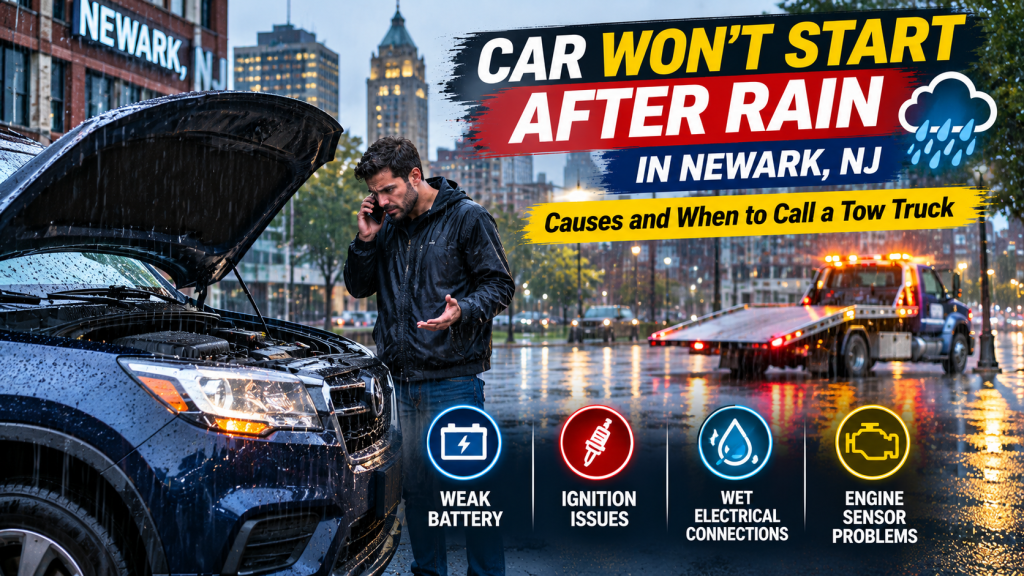
Have you ever walked out to your car after a rainy night in Newark, New Jersey, only to discover that the engine will not start? You turn the key or press the start button, but nothing happens. Perhaps you hear a clicking sound, notice dashboard warning lights, or find that the engine cranks without starting.
When a car won’t start after rain in Newark, NJ, the cause may involve a weak battery, an electrical connection, moisture affecting an ignition component, or water entering a sensitive part of the vehicle. However, the timing alone does not prove that rain caused the problem.
Understanding the warning signs can help you decide what to do next. In this guide, We Care Towing & Transport explains common reasons a vehicle may fail to start after rain, important safety precautions, and when professional towing may be necessary.
Why Won’t My Car Start After Rain?
Rain can expose existing weaknesses in a vehicle’s electrical or ignition systems. Moisture may affect damaged wiring, worn seals, or ignition components that are no longer adequately protected.
At the same time, a car that fails to start after rain may simply have a weak battery or another problem unrelated to the weather.
The symptoms can provide useful clues:
- Nothing happens when you start the car: A weak battery, poor electrical connection, or starting-system fault may be responsible.
- You hear rapid clicking: The battery may be discharged, although other electrical problems are possible.
- The engine cranks but will not start: Ignition, fuel delivery, or engine-management issues may be involved.
- The engine starts and then stalls: Several problems, including ignition or fuel system faults, may be responsible.
- Dashboard lights behave unusually: A battery, electrical connection, or charging-system issue may need inspection.
These signs are not enough to confirm a diagnosis. If your car remains disabled, a qualified mechanic can determine the underlying cause.
7 Possible Reasons Your Car Won’t Start After Rain
1. A Weak or Discharged Battery
A weak battery is one possible reason a car fails to start after sitting overnight, including after rainy weather.
When the battery cannot supply sufficient power, the engine may crank slowly, produce clicking sounds, or fail to crank at all.
Cold temperatures, an aging battery, a charging-system fault, or leaving electrical accessories on can contribute to a discharged battery.
Rain itself does not necessarily damage a properly installed battery. However, an existing electrical problem may become noticeable at the same time.
What should you do?
Check whether the dashboard lights illuminate normally and note any clicking or slow cranking. Avoid repeatedly attempting to start the vehicle, as this may further discharge the battery.
If the battery appears weak, professional battery testing or jump-start assistance may help. If the vehicle still does not start, towing may be necessary.
2. Moisture Affecting Ignition Components
Gasoline engines require an effective spark to ignite the air-fuel mixture. Depending on the vehicle, moisture affecting damaged ignition wiring, worn spark plug boots, ignition coils, or other components may contribute to starting difficulties.
You may notice rough running, engine misfires, hesitation, or a failure to start.
These symptoms do not prove that water has entered the ignition system. A qualified mechanic may need to inspect the relevant components and check diagnostic codes.
If the engine runs roughly after starting or repeatedly stalls, avoid continuing to drive until the problem has been assessed.
3. Damaged Wiring or Electrical Connections
A vehicle relies on wiring, connectors, sensors, and control modules to operate correctly. Damaged insulation, corroded connections, or deteriorated seals may allow moisture to affect electrical components.
Possible warning signs include intermittent starting, dashboard lights switching on and off, electrical accessories behaving unusually, or the engine failing to start consistently.
If electrical problems appear after rain, avoid removing electrical connectors or attempting repairs without the proper knowledge.
A mechanic can inspect the electrical system and identify whether moisture, corrosion, damaged wiring, or another fault is responsible.
4. A Faulty Starter Motor or Starting System
Sometimes the engine does not start because the starter motor, starter solenoid, relay, or related wiring has developed a fault.
You may hear a single click, repeated clicks, or no sound at all when you turn the key or press the start button.
These symptoms can overlap with battery problems, so replacing the starter without testing the system may not solve the issue.
If the vehicle remains unable to start after basic checks, arrange professional diagnosis. If you cannot get the car running safely, consider towing it to a repair facility.
5. Water Exposure Around Electrical Components
Driving through deep standing water or allowing water to enter areas that should remain dry can cause serious vehicle problems.
Depending on the vehicle and the amount of exposure, water may affect electrical connectors, sensors, control modules, or other components.
If your car was parked in a flooded area or driven through deep water before it stopped working, do not assume the issue is simply a wet battery or ignition component.
Do not attempt to start a vehicle that may have taken in water through the engine intake or suffered significant flood exposure. Starting it could cause severe engine damage or create additional electrical hazards.
Keep away from floodwater and arrange an appropriate professional assessment. If the vehicle is in an unsafe location, prioritize your personal safety before requesting recovery assistance.
6. A Wet or Damaged Air Intake System
The engine needs the correct mixture of air and fuel to operate. If water enters the air intake in sufficient quantities, it can cause severe engine damage.
A car that stops after driving through deep water should be treated differently from one that simply sat outside during ordinary rain.
If the engine stalled while crossing standing water, do not crank it again to see whether it will start. Have the vehicle assessed by a qualified professional before attempting to restart it.
In cases of suspected water ingestion, appropriate recovery and inspection may be necessary.
7. An Existing Fuel or Engine Problem
A car may fail to start after rain because of a fuel delivery issue, a faulty sensor, an engine-management fault, or another mechanical problem that happened to appear at the same time.
You may hear the engine cranking normally without it actually starting.
Because multiple problems can produce similar symptoms, guessing at the cause may waste time and money.
If the engine continues cranking without starting, or the vehicle starts and immediately stalls, arrange a diagnostic inspection rather than repeatedly attempting to start it.
What to Do When Your Car Won’t Start After Rain in Newark, NJ
If your car refuses to start, follow these steps to protect yourself and avoid making the problem worse.
Step 1: Make Sure You Are in a Safe Location
If the car is parked at home, in a parking lot, or in a driveway, assess the surroundings before attempting any checks.
If the vehicle has stopped on a busy road, turn on your hazard lights if possible and prioritize moving away from traffic safely. Do not stand in an active traffic lane or attempt repairs beside moving vehicles.
If flooding is present, do not walk or drive through floodwater to reach the car.
Step 2: Observe the Starting Symptoms
Without repeatedly trying to start the vehicle, note what happens when you attempt to start it:
- Does the engine crank normally?
- Do you hear clicking?
- Are the dashboard lights unusually dim?
- Does the engine start and then stall?
- Was the vehicle exposed to standing or floodwater?
These details can help a mechanic or towing provider understand the problem.
Step 3: Avoid Repeated Starting Attempts
Repeatedly turning the key or pressing the start button may drain the battery and make diagnosis more difficult.
If the engine stalled after driving through deep water, do not attempt another start. Water ingestion can cause serious damage.
Avoid opening electrical components or disconnecting wiring unless you have the appropriate knowledge and the manufacturer’s instructions permit it.
Step 4: Look for Obvious Warning Signs From a Safe Position
If it is safe to do so, look for unusual conditions such as visible water inside the vehicle, smoke, burning smells, damaged wiring, or signs of flooding.
Do not touch wet electrical components, crawl under the vehicle, or open areas that may expose you to electrical or mechanical hazards.
If you notice smoke, fire, or an immediate safety threat, move away and contact emergency services.
Step 5: Decide Whether Professional Assistance Is Needed
If the vehicle will not start after basic, safe observations, professional diagnosis is the next step.
A battery problem may require testing or jump-start assistance. A starter, ignition, fuel, or electrical fault may require repair. A vehicle exposed to deep water may need a more comprehensive inspection before it can be started safely.
If the car cannot be driven or should not be restarted, professional towing can help transport it to a suitable repair facility.
Learn more about car towing services in Newark, NJ.
Is It Safe to Jump-Start a Car After Rain?
Not in every situation.
A jump-start may help when the battery is discharged and the vehicle has no signs of flooding, electrical damage, or another serious problem.
However, you should not attempt a jump-start if:
- The battery is visibly damaged, swollen, or leaking.
- Electrical components are wet or damaged.
- The vehicle has been submerged or exposed to significant floodwater.
- You notice smoke, burning smells, or signs of a short circuit.
- You are unsure how to connect the equipment safely.
Always follow the vehicle manufacturer’s jump-starting instructions. Some vehicles have designated jump-start terminals and special procedures.
If you are uncertain about the cause, professional assistance is safer than experimenting with electrical components.
Why Rain-Related Car Problems Can Be Difficult in Newark
Newark drivers may encounter wet roads, heavy traffic, parking restrictions, and busy intersections during rainy weather.
A car that fails to start in a driveway may be inconvenient, but a disabled vehicle in a public parking area or roadside location can create additional challenges.
Never risk your safety by attempting repairs beside moving traffic or entering a flooded area to reach your vehicle.
If the car cannot be started safely, arranging appropriate roadside assistance or towing may be the most practical next step.
How We Care Towing & Transport Can Help
When your car will not start and cannot be safely driven, We Care Towing & Transport provides towing assistance for drivers in Newark, NJ, and surrounding areas.
A towing provider can help transport an appropriate disabled vehicle to a repair shop or another suitable destination. The recovery method depends on the vehicle, its condition, and the circumstances.
If the car has been exposed to deep water or you suspect water has entered the engine, explain this before requesting recovery. Do not attempt to restart the vehicle while waiting for assistance.
When requesting towing, be ready to provide:
- Your location or nearest cross street.
- The make, model, and approximate year of the vehicle.
- Whether the engine cranks, clicks, or remains silent.
- Whether the vehicle was parked in rain or driven through standing water.
- Any dashboard warnings or unusual smells.
- Whether the vehicle is in a driveway, parking lot, or roadside location.
These details help the provider understand the situation and consider the appropriate recovery approach.
Visit We Care Towing & Transport to learn more about available towing services.
How to Reduce the Risk of Starting Problems After Rain
Not every starting problem can be prevented, but routine maintenance may help identify weaknesses before they become serious.
Consider these precautions:
- Have an aging battery tested periodically.
- Ask a qualified mechanic to inspect damaged or corroded electrical connections.
- Replace worn ignition components according to the manufacturer’s maintenance schedule.
- Keep battery terminals and connections maintained as recommended by the vehicle manufacturer.
- Repair damaged seals and wiring rather than ignoring recurring moisture problems.
- Avoid driving through deep standing water.
- Follow the manufacturer’s instructions after flood exposure.
- Investigate repeated starting problems instead of relying on repeated jump-starts.
Preventive maintenance cannot guarantee that your car will start in every condition, but it can help reduce avoidable breakdowns.
Frequently Asked Questions
1. Why won’t my car start after heavy rain?
Possible causes include a weak battery, damaged electrical connections, ignition problems, or water exposure. If the car was driven through deep water, do not attempt to restart it until it has been assessed.
2. Can rain damage a car battery?
Normal rain should not automatically damage a properly installed battery. However, an existing battery, charging-system, or electrical connection problem may become noticeable around the same time.
3. Why does my car click but not start after rain?
Clicking may indicate a discharged battery, a poor electrical connection, or a starter-system problem. The sound alone cannot confirm which component has failed.
4. Should I keep trying to start my car if it got wet?
Avoid repeated starting attempts. If the vehicle was exposed to deep water, stalled in floodwater, or may have water in its engine intake, do not restart it. Arrange professional assessment.
5. Can a tow truck help if my car won’t start?
Yes. If the vehicle remains disabled and cannot be safely driven, towing can transport it to a repair facility. Explain any floodwater exposure or suspected electrical damage before recovery is arranged.
6. What if my car starts but runs roughly after rain?
Rough running may indicate an ignition, electrical, fuel, or other engine problem. If the vehicle shakes severely, stalls, or displays serious warning signs, stop driving when safe and arrange professional inspection.
7. Where can I get towing assistance in Newark, NJ?
Visit We Care Towing & Transport to learn about towing assistance for disabled vehicles in Newark and nearby areas.
Final Thoughts
A car that will not start after rain may have a battery, starting-system, ignition, electrical, or water-related problem. The timing of the breakdown can provide a clue, but it does not establish the cause.
If your car won’t start after rain in Newark, NJ, prioritize safety, avoid repeated starting attempts, and never restart a vehicle that may have suffered water ingestion.
When the vehicle cannot be safely driven, We Care Towing & Transport can help you explore appropriate towing assistance so your car can be transported for professional inspection.
Stay safe, avoid flooded roads, and address unexpected vehicle problems before they become more serious.
Learn more at wecaretransportnj.com.