
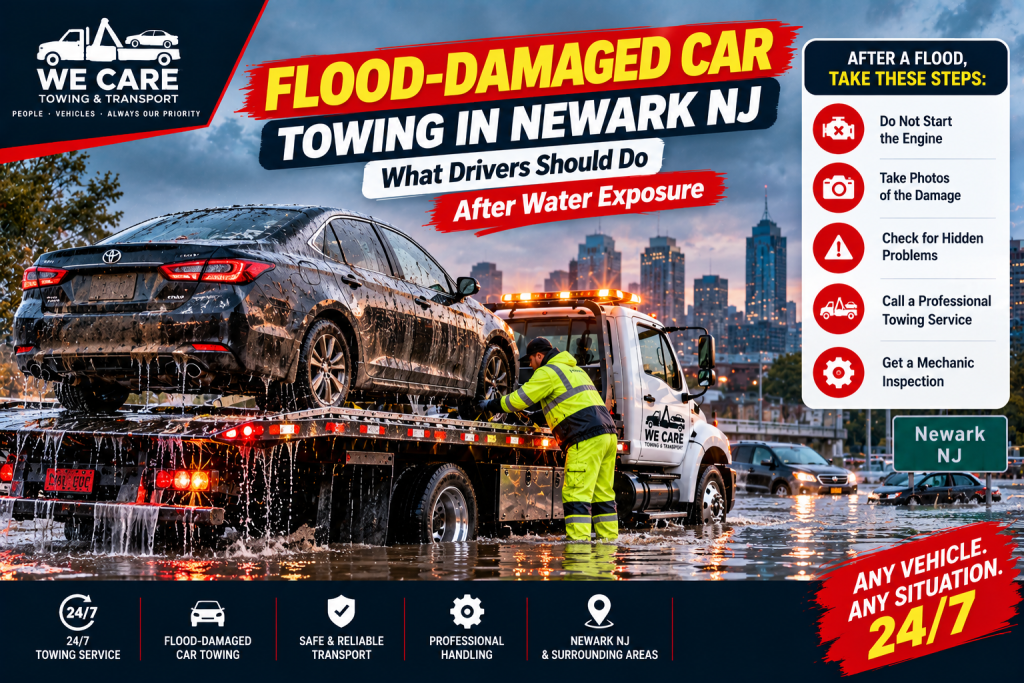
Heavy rain and flooding can create unexpected problems for drivers in Newark, NJ. Water can cover roads, parking areas, and driveways, leaving vehicles stranded or exposed to floodwater. Even if your car looks normal after the water recedes, it may have hidden damage that makes driving unsafe.
If your vehicle has been caught in a flood, knowing what to do next can help protect you and prevent additional damage. In some situations, arranging professional flood-damaged car towing in Newark NJ may be the safest way to move your vehicle.
In this guide, we explain what drivers should do after their cars are exposed to floodwater, warning signs to look for, and when to consider calling a towing service.
1. Why Floodwater Can Damage Your Car
Floodwater can affect several important parts of a vehicle. The amount of damage depends on how deep the water was, how long the vehicle was exposed, and whether water entered the engine or passenger compartment.
Some common areas that may be affected include:
- Engine: Water entering the engine can cause serious mechanical problems. Starting the engine before it is inspected may make the damage worse.
- Electrical system: Water can affect wiring, sensors, connectors, and electronic components.
- Brakes: Floodwater and debris may interfere with braking components.
- Interior: Water inside the cabin can soak carpets, seats, and insulation.
- Transmission: Water entering certain transmission components can lead to problems that require professional inspection.
Even if your vehicle starts after a flood, that does not necessarily mean it is safe to drive. A qualified mechanic should inspect it before you return to the road.
2. What to Do If Your Car Has Been Exposed to Floodwater
If your vehicle has been caught in a flood, take a few precautions before attempting to move it.
Do Not Start the Engine
If your car has been submerged or exposed to significant floodwater, avoid starting it. Water may have entered the engine or electrical system. Attempting to start the vehicle could cause additional damage.
Instead, arrange for a professional inspection and towing if the vehicle cannot safely be driven.
Check Your Surroundings First
Before approaching your vehicle, make sure the surrounding area is safe. Floodwater may hide debris, damaged pavement, open drains, or electrical hazards.
Never walk through moving floodwater to reach your car. Follow local emergency instructions and stay away from downed power lines.
Take Photos of the Damage
If it is safe to do so, take photos of your vehicle and the surrounding conditions. These photos may be useful when documenting the incident for your insurance company.
You can photograph:
- The vehicle’s exterior
- Visible water levels or watermarks
- The interior, if it is safe to access
- Any visible damage
Do not put yourself at risk to take pictures.
3. Signs Your Car May Need Flood-Damage Towing
Some flood-related damage is easy to notice, while other problems may not appear until later. Consider arranging a tow if you notice any of the following:
- Your car was submerged in floodwater.
- Water entered the passenger compartment.
- The engine stalled while driving through water.
- The dashboard displays unexpected warning lights.
- The vehicle will not start after the flood.
- You notice unusual electrical behavior.
- The brakes feel different or do not respond normally.
- You see water or mud around important vehicle components.
These signs do not all indicate the same type of damage. A mechanic should inspect the vehicle to determine what repairs are needed.
If you are unsure whether the car is safe to drive, avoid taking unnecessary risks and arrange professional assistance.
4. Why You Should Avoid Driving a Flood-Damaged Car
A vehicle that has been exposed to floodwater may have problems that are not immediately visible. Driving it before inspection can increase the risk of a breakdown or further damage.
For example, electrical components may malfunction, brakes may not work as expected, or water may have entered mechanical systems.
Flooded roads also create a serious safety risk. The National Weather Service warns that even relatively shallow moving water can sweep vehicles away. Never attempt to drive through a flooded road or around a road closure.
For more information, read the NHTSA’s guidance on driving in severe weather.
If your vehicle is already damaged by floodwater, have it inspected before driving it again.
5. When Should You Call a Towing Service?
You may need a towing service if your vehicle is unable to start, has been submerged, or cannot be driven safely.
Consider calling for a tow when:
- Your vehicle is stranded in a parking area after flooding.
- The engine stopped after water exposure.
- You suspect water entered the engine.
- Your car has electrical problems after the flood.
- Your vehicle is blocking a driveway or another accessible area.
- A mechanic has advised you not to drive the vehicle.
When contacting a towing company, explain that the vehicle has been exposed to floodwater. Share its location, vehicle type, and any visible problems.
This information can help the towing provider understand the situation and discuss suitable transport arrangements.
6. How Flatbed Towing Can Help Move a Flood-Damaged Vehicle
Flatbed towing can be a suitable option for moving many vehicles that should not be driven. The vehicle is loaded onto the truck’s flat platform instead of being driven on its own wheels.
Depending on the vehicle’s condition and the equipment available, flatbed towing may help transport a flood-damaged car to a repair shop or another safe location.
However, the appropriate towing method depends on the vehicle, its condition, and the extent of the damage. Tell the towing provider about the flood exposure before the truck is dispatched.
Learn more about our flatbed towing service in Newark NJ.
7. What Information Should You Give the Tow Truck Operator?
When requesting flood-damaged car towing in Newark NJ, providing accurate information can help the operator prepare for the job.
Be ready to share:
- Your vehicle’s make and model
- Your exact pickup location
- Whether the vehicle was submerged
- Whether the engine starts
- Whether the vehicle is in a parking garage, driveway, or roadside location
- Your preferred destination, such as a repair shop
If the vehicle is in a dangerous location or surrounded by floodwater, prioritize your own safety and follow instructions from emergency responders.
8. What Happens After Your Flood-Damaged Car Is Towed?
Once your vehicle has been transported to a safe location, arrange for a qualified mechanic to inspect it.
Depending on the circumstances, the inspection may include:
- Checking the engine and air intake
- Inspecting electrical components
- Examining the brakes
- Checking the transmission and other affected systems
- Assessing water damage to the interior
If you have comprehensive auto insurance, contact your insurance provider to ask about your coverage and the documentation required for a claim. Coverage depends on your policy and the circumstances of the incident.
Keep any inspection reports, towing receipts, and photographs related to the damage.
9. Flood-Damaged Car Towing in Newark NJ
When flooding leaves your vehicle stranded, arranging safe transportation is an important part of getting the situation under control.
We Care Towing & Transport provides towing and vehicle recovery services in Newark, NJ, with 24/7 emergency availability. If your vehicle has been affected by flooding and cannot be driven safely, contact us to discuss your towing needs.
Our team can help arrange vehicle transportation to a repair shop or another suitable destination. Be sure to explain the vehicle’s condition and any flood exposure when requesting assistance.
Visit our 24/7 towing services page to learn more about our services.
10. Frequently Asked Questions
Can I drive my car after it has been exposed to floodwater?
It depends on the extent of the exposure and the condition of the vehicle. If it was submerged, stalled in water, or shows warning signs, do not start or drive it until it has been inspected.
Should I start my car to see if it still works after a flood?
No. If the vehicle has been submerged or significant water exposure is suspected, avoid starting the engine. Have it inspected first.
Is flatbed towing suitable for a flood-damaged car?
Flatbed towing can be suitable for many vehicles that should not be driven. The towing provider should assess the vehicle’s condition and determine the appropriate method.
Can a towing company take my flood-damaged car to a repair shop?
Yes. You can request transportation to a repair shop or another suitable destination. Confirm the destination and towing arrangements when you call.
Is emergency towing available in Newark NJ?
We Care Towing & Transport advertises 24/7 emergency towing availability in Newark, NJ. Contact the company to discuss your vehicle’s location and towing requirements.
Conclusion
Floodwater can cause serious problems for vehicles, even when the damage is not immediately visible. If your car has been submerged, stalled in water, or developed problems after a flood, avoid starting or driving it until it has been inspected.
When your vehicle cannot be moved safely, professional towing can help transport it to a repair shop or another suitable location. For flood-damaged car towing in Newark NJ, We Care Towing & Transport provides 24/7 towing and vehicle recovery services.
Stay safe, follow local flood warnings, and avoid driving through flooded roads.