
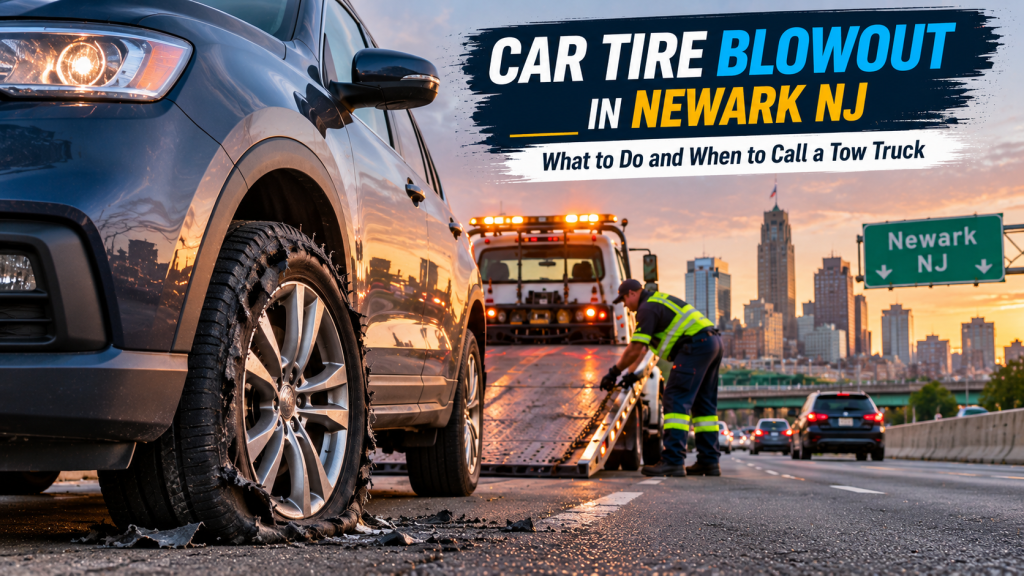
A tire blowout can happen without warning and turn an ordinary drive into a dangerous roadside emergency. You may hear a loud popping sound, feel the steering wheel pull suddenly, or notice your vehicle becoming difficult to control. When a tire suddenly loses air at driving speed, knowing how to respond can help you protect yourself and other road users.
If you experience a car tire blowout in Newark NJ, your first priority should be maintaining control of your vehicle and reaching a safe location. Whether you are driving through downtown Newark, traveling along I-78, or commuting through Essex County, a damaged tire can leave your vehicle unsafe to drive.
We Care Towing & Transport provides towing and vehicle recovery assistance for drivers who need help after a roadside breakdown. In this guide, we explain why tire blowouts happen, what to do immediately, how to recognize a dangerous tire, and when calling a tow truck may be the safest option.
What Is a Tire Blowout?
A tire blowout occurs when a tire suddenly loses air, often because of structural damage or a failure in the tire. Unlike a slow puncture, which may allow you to notice a gradual loss of pressure, a blowout can happen quickly and affect the vehicle’s handling.
A blowout may cause the vehicle to pull toward one side, vibrate, or become unstable. The effect depends on which tire fails, the vehicle’s speed, road conditions, and other factors.
A severely damaged tire should not be treated as a minor inconvenience. Continuing to drive on a failed tire can damage the wheel, affect vehicle control, and put you and other road users at risk.
7 Common Causes of a Tire Blowout
Understanding the common causes of tire failure can help you identify potential problems before they become emergencies.
1. Underinflated Tires
Tires that are significantly underinflated can flex more than intended, creating excess heat during driving. This can contribute to tire damage and increase the risk of failure.
Check your tire pressure regularly and follow the vehicle manufacturer’s recommended pressure, usually listed on the driver’s door-jamb label or in the owner’s manual. Do not rely solely on the maximum pressure printed on the tire sidewall.
2. Worn-Out Tire Tread
Tires lose tread as they wear. Excessively worn tires may have reduced traction and become more vulnerable to certain road hazards.
Inspect your tires for low tread, uneven wear, cracks, and other visible damage. If a tire appears worn beyond safe limits, arrange replacement rather than waiting for a breakdown.
3. Road Hazards and Potholes
Potholes, sharp debris, damaged pavement, and other road hazards can damage a tire or wheel. A hard impact may also cause internal tire damage that is not immediately visible.
If you hit a major pothole and subsequently notice vibration, bulging, loss of pressure, or unusual handling, have the tire and wheel inspected before continuing normal driving.
4. Overloaded Vehicles
Carrying more weight than the vehicle or tire is designed to support can increase stress on the tires. Always follow the vehicle’s loading limits and tire specifications.
Before a long journey, check the recommended tire pressure for the load you are carrying and make sure your vehicle is not overloaded.
5. Excessive Heat and Long Driving Periods
High temperatures, prolonged driving, underinflation, and tire damage can combine to increase tire stress. A tire that is already compromised may be more likely to fail under demanding conditions.
Regular inspections and proper inflation can help reduce avoidable risks, although they cannot eliminate every possible tire failure.
6. Old or Damaged Tires
Tires can deteriorate with age and environmental exposure, even when the vehicle is not driven frequently. Cracks, bulges, cuts, and exposed internal material are warning signs that a tire needs professional attention.
Follow the tire manufacturer’s guidance regarding age and replacement. If a tire has a visible bulge or serious damage, avoid driving on it.
7. Improper Tire Repairs or Installation
An unsuitable repair, damaged valve stem, incorrect installation, or wheel-related problem can contribute to air loss or tire failure.
If a tire repeatedly loses pressure after a repair, have it inspected by a qualified tire professional. Do not assume that adding air resolves the underlying problem.
What to Do When Your Car Has a Tire Blowout While Driving
A tire blowout can be frightening, particularly on a busy road. The following steps can help you respond more safely.
Step 1: Keep a Firm Grip on the Steering Wheel
If a tire fails, hold the steering wheel firmly and concentrate on keeping the vehicle moving in a controlled direction.
Avoid sudden steering movements. A sharp correction can make the vehicle more difficult to control.
Step 2: Avoid Hard Braking
Do not slam on the brakes. Sudden braking may destabilize the vehicle, especially if the tire failure has already affected handling.
Ease off the accelerator gradually and allow the vehicle to slow in a controlled manner.
Step 3: Do Not Accelerate to Test the Tire
Avoid accelerating or making abrupt maneuvers to see whether the vehicle still feels normal. Focus on maintaining control and moving toward a safer stopping location.
Step 4: Move Away From Traffic When Safe
When you have sufficient control, guide the vehicle toward a safe shoulder, parking area, or another location away from moving traffic.
Do not attempt to reach a particular exit or repair shop if doing so would require driving on a failed tire or putting yourself at risk.
Step 5: Turn on Your Hazard Lights
Once appropriate, activate your hazard lights to alert other drivers that your vehicle is experiencing a problem.
Be aware of surrounding traffic, particularly if you are on a highway or a narrow shoulder.
Step 6: Stay Away From Moving Traffic
Once stopped, assess your surroundings before exiting the vehicle. If leaving the vehicle would expose you to moving traffic, remain in a safer position and contact emergency services or roadside assistance as appropriate.
If you can safely move away from traffic, do so. Never stand directly behind or in front of a vehicle stopped on a busy roadway.
Step 7: Arrange Professional Assistance
If the tire is shredded, the wheel is damaged, or the vehicle cannot be moved safely, request roadside assistance or towing.
For additional information about highway-related breakdowns, read our guide to I-78 highway towing in Newark, NJ.
Can You Drive on a Flat Tire After a Blowout?
In most situations, you should not continue driving on a completely flat or shredded tire. Doing so can damage the wheel, affect steering and handling, and create additional safety risks.
Even if the vehicle appears to move normally at very low speed, the tire may no longer provide the support and control required for safe driving.
Some vehicles have run-flat tires designed to operate for a limited distance under specified conditions. However, you must follow the manufacturer’s instructions and consider the tire’s actual condition. A run-flat tire is not a guarantee that continuing to drive is safe after every failure.
If you are unsure whether your vehicle can be moved safely, stop and seek professional advice. Towing may be the safer option, especially if the tire has separated from the wheel or the wheel itself has been damaged.
What If a Tire Blowout Happens on a Newark Highway?
A blowout on a highway can be particularly stressful because vehicles are traveling at speed and stopping areas may be limited.
If a tire fails on I-78 or another busy route in or around Newark, focus on controlling the vehicle and reaching a safe stopping location if possible.
Keep these precautions in mind:
- Avoid sudden braking or sharp steering corrections.
- Turn on your hazard lights when appropriate.
- Do not attempt a roadside tire change in a location exposed to moving traffic.
- Do not stand near traffic to inspect the damaged tire.
- Share your location and direction of travel when requesting help.
- Follow instructions from emergency personnel or roadside assistance providers.
If the vehicle stops in a live traffic lane, creates an immediate hazard, or leaves you in danger, contact emergency services. Do not assume a regular roadside stop is safe simply because the vehicle has stopped moving.
For drivers who need help transporting a disabled vehicle, We Care Towing & Transport provides towing and vehicle recovery assistance in its service area.
When Should You Call a Tow Truck After a Tire Blowout?
Not every flat tire requires the same response. However, several situations make professional towing a sensible choice.
Consider arranging towing if:
- The tire is shredded or has separated from the wheel.
- The wheel appears bent, cracked, or otherwise damaged.
- The vehicle pulls sharply or feels unstable.
- You hear grinding or metal scraping near the wheel.
- More than one tire is damaged.
- You cannot safely change the tire at your location.
- The vehicle is stopped on a busy road or highway.
- You do not have a suitable spare tire or the required equipment.
- Your vehicle’s manufacturer requires a specific towing method after damage.
Towing may also be appropriate if the blowout caused damage to the suspension, brakes, or other components.
When requesting assistance, tell the towing provider which tire failed, whether the wheel appears damaged, and whether the vehicle can roll or steer. Mention any restrictions that may affect loading or transport.
Learn more about our car towing service in Newark, NJ.
Flat Tire Change or Towing: Which Option Is Better?
The appropriate response depends on the damage and your location.
A spare tire change may be possible if the vehicle is parked in a safe location, the wheel is undamaged, and the owner’s manual permits the procedure. You must also have a suitable spare, the correct tools, and a safe place to work.
Towing may be preferable if the tire has been destroyed, the wheel is damaged, the vehicle is unstable, or you are stopped in a dangerous location.
A tire replacement alone may not resolve the problem if the blowout also damaged a wheel or suspension component. A qualified technician should inspect the affected area when there is reason to suspect additional damage.
Safety should determine the decision—not the desire to get back on the road quickly.
How to Prevent Tire Blowouts
Although no maintenance routine can prevent every tire failure, these practices can help reduce avoidable risks.
Check Tire Pressure Regularly
Use a reliable pressure gauge when the tires are cold and compare the reading with the manufacturer’s recommended pressure. Inspect the tires before long journeys and whenever you suspect air loss.
Inspect Tires for Damage
Look for cuts, cracks, bulges, exposed cords, and uneven wear. If you find significant damage, avoid driving on the affected tire and seek professional inspection.
Monitor Tread Wear
Replace tires when they reach the manufacturer’s or applicable legal tread limits. Do not wait for the tread to become dangerously worn.
Avoid Overloading Your Vehicle
Follow the vehicle’s payload limits and the load ratings specified for your tires. Excess weight can increase tire stress and affect vehicle handling.
Slow Down on Damaged Roads
Reduce speed appropriately when driving over potholes, uneven pavement, and other road hazards. If you hit a severe road defect, inspect the tires and wheels for signs of damage before continuing.
Maintain Your Wheels and Tires
Have persistent pressure loss, vibration, alignment concerns, and uneven wear checked by a qualified professional.
For general tire safety information, consult the National Highway Traffic Safety Administration’s tire safety resources.
Frequently Asked Questions
What should I do first during a tire blowout?
Hold the steering wheel firmly, avoid hard braking, ease off the accelerator, and focus on maintaining control. When it is safe, move away from traffic and stop. Turn on your hazard lights as appropriate and arrange assistance.
Is it safe to change a tire on the highway?
Changing a tire beside fast-moving traffic can be dangerous. If you are on a narrow shoulder or another exposed location, do not attempt a roadside repair there. Prioritize your safety and contact emergency services or roadside assistance as needed.
Can a tire blowout damage the wheel?
Yes. Driving on a failed tire or experiencing a severe impact can damage the wheel. If the wheel is bent, cracked, or visibly damaged, the vehicle should be inspected before it is driven again.
Why do tire blowouts happen?
Possible causes include underinflation, excessive wear, road hazards, overloading, aging, and existing tire damage. A tire professional can inspect a failed tire to help identify the likely cause.
When should I call a towing company in Newark, NJ?
Consider towing if the tire is shredded, the wheel is damaged, the vehicle is unstable, or the breakdown occurs in an unsafe location. Towing is also appropriate when you cannot safely replace the tire or the vehicle has additional damage.
Does We Care Towing & Transport help with disabled vehicles?
We Care Towing & Transport provides towing and vehicle recovery assistance in Newark, NJ, and surrounding service areas. Contact the company to discuss your vehicle’s condition, location, and transportation needs.
Need Towing Assistance in Newark, NJ?
A tire blowout can happen unexpectedly, but a calm and safety-focused response can help reduce the risk of a more serious incident. Maintain control, avoid sudden braking, stop in a safe location, and do not continue driving on a destroyed tire.
If your vehicle is disabled after a tire blowout, We Care Towing & Transport provides towing and vehicle recovery assistance in Newark, New Jersey, and surrounding areas.
Visit We Care Towing & Transport to learn more about our services and available towing assistance.
Stay alert, maintain your tires, and put roadside safety first.