
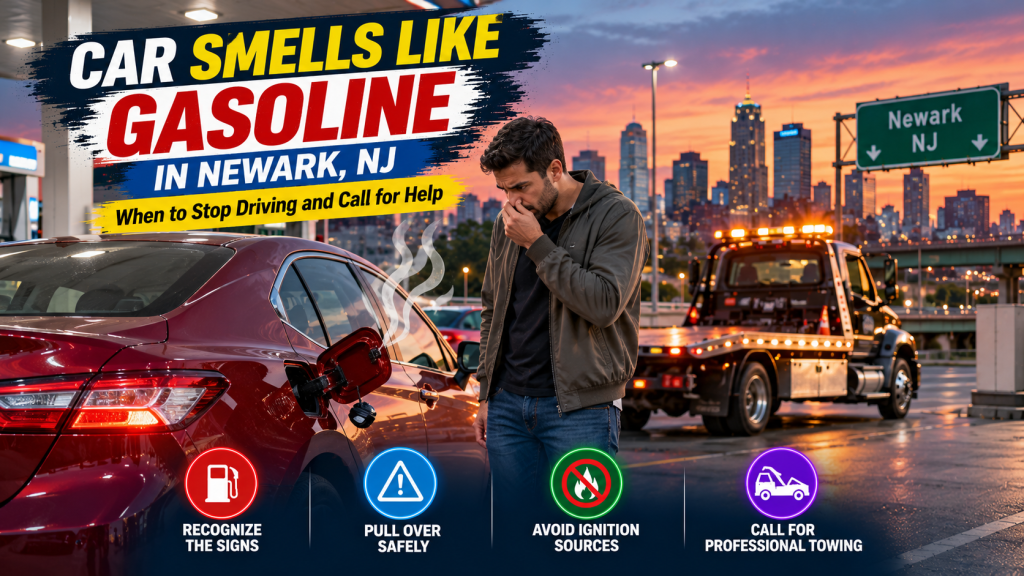
Have you ever started your car in Newark, New Jersey, and noticed a strong gasoline smell inside the cabin or around your vehicle? While a brief fuel odor may sometimes occur after refueling, a persistent or strong gasoline smell should never be ignored.
A car that smells like gasoline in Newark, NJ, may have a loose fuel cap, a fuel system problem, a damaged fuel line, an evaporative emissions system fault, or another issue that requires professional inspection. Because gasoline is highly flammable, identifying a possible fuel leak is a safety priority.
Whether you are driving through city traffic, leaving a gas station, or parking at home, knowing how to respond can help protect you and others.
In this guide, We Care Towing & Transport explains possible causes of gasoline odors, what drivers should do when they notice the smell, and when professional towing may be the safer option.
Why Does My Car Smell Like Gasoline?
A gasoline odor can have several causes. The location, intensity, and timing of the smell may offer clues, but they cannot confirm the exact problem.
For example, an odor noticed immediately after refueling may have a different explanation from a strong smell that continues while driving or appears when the vehicle is parked.
Possible causes include:
- A loose, damaged, or missing fuel cap
- A leak in a fuel line or fuel connection
- A problem with the fuel tank or related components
- A faulty evaporative emissions system
- An engine running problem that causes an unburned-fuel odor
- Gasoline spilled during refueling
If the smell is strong, persistent, or accompanied by visible liquid, do not assume it is harmless.
7 Possible Reasons Your Car Smells Like Gas
1. Loose or Damaged Gas Cap
A fuel cap helps seal the fuel system. If it is loose, damaged, or missing, fuel vapors may escape.
You may notice a gasoline smell after filling the tank or see a check engine light if the vehicle detects an evaporative emissions system problem.
If there is no strong odor, no visible leak, and no other warning sign, you can check whether the cap is correctly secured once you are in a safe location and the vehicle is switched off.
However, if the smell is strong or continues after the cap is secured, do not keep driving in an attempt to see whether it disappears. Arrange a professional inspection.
2. Damaged Fuel Lines
Fuel lines carry gasoline between the tank and the engine. Damage, corrosion, loose connections, or deteriorated components may allow fuel to escape.
Possible warning signs include a strong gasoline odor, visible wet spots, or liquid dripping beneath the vehicle.
A suspected fuel leak is a serious safety concern. Do not start the engine, attempt a roadside repair, or drive the car to a repair shop. Move away from the vehicle and contact appropriate professional assistance from a safe location.
If the vehicle is leaking fuel or the odor is overwhelming, contact emergency services or the fire department when necessary. A towing provider should be informed about the suspected fuel leak before any recovery is attempted.
3. A Fuel Tank or Tank Connection Problem
The fuel tank stores gasoline and is connected to several components that help deliver fuel and manage vapors.
Damage to the tank, its seals, or associated connections may cause fuel odors. A collision, impact with road debris, or deterioration can potentially contribute to a problem.
If you notice gasoline dripping beneath the rear of your vehicle or smell strong fuel vapors near the tank, avoid driving.
Do not crawl underneath the vehicle to inspect the tank, and never use a flame or other ignition source to investigate the smell.
Professional inspection is the safest way to determine whether the tank or a related component needs repair.
4. Evaporative Emissions System Problems
Modern vehicles have an evaporative emissions system designed to control fuel vapors rather than release them directly into the atmosphere.
A damaged vapor hose, faulty seal, or malfunctioning system component may contribute to gasoline odors. The vehicle may also display a check engine light.
An emissions-system fault does not automatically mean there is a dangerous liquid fuel leak. However, it is not possible to distinguish every harmless vapor issue from a more serious fault based on smell alone.
If the odor is strong, persistent, or unexplained, have the vehicle inspected instead of ignoring the problem.
5. Gasoline Spilled During Refueling
Sometimes gasoline spills onto the exterior of the vehicle, your clothing, or the ground while refueling. This can produce a temporary odor.
If you suspect a spill, move away from ignition sources and follow the gas station’s safety instructions. Do not continue refueling if there is an active spill or another hazard.
A brief odor following a small spill may fade, but a persistent smell inside the vehicle or an odor accompanied by visible fuel should not be dismissed.
Never assume that every gasoline smell after refueling is simply a spill.
6. Engine Performance Problems
An engine that is not burning fuel correctly may produce unusual exhaust odors. Possible causes include ignition misfires, fuel system faults, or engine management problems.
You might also notice rough idling, poor acceleration, shaking, or a check engine light.
These symptoms can have several causes, so a diagnostic inspection may be necessary. If the engine is running roughly and there is a strong fuel smell, stop driving when safe and seek professional assistance.
If you suspect an actual fuel leak, do not restart the engine to test whether the problem has disappeared.
7. A Problem After a Collision or Road Impact
Even a minor collision or impact with an object on the road may damage components beneath a vehicle.
If a gasoline smell begins after an accident, hitting debris, or striking a curb, treat the situation seriously. Damage may not be immediately visible.
Stop in a safe place if you can do so without putting yourself in danger. If fuel is leaking or there is a strong gasoline odor, move away from the vehicle and contact emergency services when appropriate.
Do not attempt to drive the vehicle to a repair facility. Explain the suspected fuel problem when requesting recovery assistance.
What Should You Do If Your Car Smells Like Gasoline in Newark, NJ?
Your response should depend on the severity of the odor and whether you suspect an active leak.
Step 1: Take a Strong Gasoline Smell Seriously
If you notice a strong or persistent gasoline smell, avoid continuing your journey. Do not assume opening a window or turning on the air conditioning makes the vehicle safe.
If you are moving in traffic, prioritize maintaining control and reaching a safe stopping location without making sudden or dangerous maneuvers.
Step 2: Switch Off the Engine When Safe
Once safely stopped, turn off the engine if you can do so safely. Avoid restarting it to test whether the odor returns.
Do not smoke, light matches, or introduce other ignition sources near the vehicle. Avoid actions that could create sparks if a fuel leak is suspected.
Step 3: Move Away if There May Be a Leak
If the smell is strong, fuel is visible, or you suspect a leak, move away from the vehicle and keep other people clear of the area.
Do not inspect beneath the vehicle, touch leaking fuel, or attempt to repair a fuel line yourself.
If you see a substantial spill, smoke, or fire, or believe there is an immediate danger, contact emergency services from a safe location.
Step 4: Avoid Driving to a Repair Shop
Driving a vehicle with a suspected fuel leak can increase the risk of fire and expose you to dangerous fumes.
Do not continue driving just because the engine still runs normally. Arrange professional help and clearly explain the gasoline odor and any visible leakage.
Step 5: Arrange Appropriate Professional Assistance
Tell the towing provider that you suspect a gasoline leak or fuel system problem before the vehicle is moved. This information matters because a vehicle leaking fuel may require special safety precautions or emergency response before recovery.
For towing information, visit We Care Towing & Transport.
Is It Safe to Drive a Car That Smells Like Gas?
There is no single answer for every situation, because the cause and severity can vary. However, a strong gasoline smell, suspected fuel leak, or persistent unexplained fuel odor should be treated as a safety concern.
Do not drive if:
- You see gasoline dripping beneath the vehicle.
- The gasoline smell is strong or continues to get worse.
- The smell began after a collision or road impact.
- The engine is misfiring or running unusually while a fuel odor is present.
- You notice smoke, unusual heat, or another sign of immediate danger.
If you suspect a leak, stop using the vehicle and move away. Seek emergency help if necessary and arrange appropriate professional recovery only after communicating the hazard.
Even when there is no visible leak, a persistent gasoline smell should be checked by a qualified mechanic before you resume normal driving.
Why You Should Not Ignore Gasoline Odors in Newark Traffic
Newark drivers may travel through congested intersections, busy commercial areas, highway entrances, parking facilities, and stop-and-go traffic.
If a fuel system problem develops during a journey, finding a safe stopping location may require careful planning. Continuing to drive a potentially leaking vehicle can expose the driver, passengers, and other road users to unnecessary risk.
A disabled vehicle can also create traffic hazards if it stops in an unsafe location.
When a gasoline smell makes the vehicle unsafe to operate, prioritize personal safety over reaching your destination. If an emergency response is required, contact the appropriate emergency service first rather than treating the situation as an ordinary towing request.
How We Care Towing & Transport Can Help
When a vehicle cannot safely continue its journey, We Care Towing & Transport provides towing assistance for drivers in Newark, NJ, and surrounding areas.
A towing provider can help transport an appropriate disabled vehicle to a repair facility or another suitable destination. The recovery method depends on the vehicle’s condition and the circumstances.
If your car smells strongly of gasoline, tell the provider about the suspected leak before requesting recovery. Do not approach or attempt to move a vehicle that may present an immediate fire hazard. Emergency responders may need to assess the situation first.
When it is safe to communicate, provide the following details:
- Your location or nearest cross street
- Your vehicle’s make, model, and approximate year
- Whether the gasoline smell is strong or persistent
- Whether you can see liquid beneath the vehicle
- Whether the smell started after refueling, a collision, or while driving
- Whether smoke or other warning signs are present
This information helps the provider understand the situation and determine the appropriate next steps.
Learn more about available towing services on the We Care Towing & Transport website.
How to Help Prevent Fuel System Problems
Not every fuel system issue can be prevented, but sensible maintenance may help identify some problems early.
Follow your vehicle manufacturer’s maintenance schedule and have unusual fuel odors investigated promptly. Replace damaged fuel caps and other components when recommended by a qualified professional.
Additional precautions include:
- Avoid topping off the fuel tank after the pump automatically stops.
- Do not ignore a check engine light or recurring gasoline odor.
- Arrange a professional inspection after a collision or significant road impact.
- Watch for unusual fuel consumption or unexplained wet spots near your parked vehicle.
- Follow the manufacturer’s recommendations for fuel system maintenance.
- Check whether your vehicle has an open safety recall using the official NHTSA recall lookup.
Never try to locate a fuel leak with a flame or by starting the engine repeatedly. If you suspect a leak, stop using the vehicle and seek appropriate professional help.
Frequently Asked Questions
1. Why does my car smell like gasoline but have no visible leak?
Fuel vapors, a loose fuel cap, an evaporative emissions problem, or another fuel system fault may cause an odor without an obvious puddle. A hidden leak is also possible. A persistent smell should be professionally inspected.
2. Is it normal for a car to smell like gasoline after refueling?
A brief odor may occur after a small spill during refueling, but a strong or persistent smell is not something to ignore. If you suspect a leak, do not start or drive the vehicle.
3. Can a gasoline smell inside the car be dangerous?
It can be. Gasoline vapors are flammable, and exposure to fuel vapors can also be harmful. If the odor is strong, move to a safe location, switch off the engine when safe, and get away from a suspected leak.
4. Should I call a tow truck if my car smells like gas?
If the odor is strong, persistent, or accompanied by suspected fuel leakage, do not drive the car. Tell the towing provider about the potential fuel hazard before arranging recovery. Contact emergency services first if there is an immediate danger.
5. Can a loose gas cap cause a check engine light?
Yes, a loose, damaged, or missing fuel cap can contribute to an evaporative emissions system fault and trigger a warning light on some vehicles. However, the light may have other causes, so diagnosis may be necessary.
6. What should I do if I smell gasoline after an accident?
Stop in a safe place if possible, turn off the engine when safe, and move away from the vehicle if you suspect a leak. Avoid ignition sources and contact emergency services if there is an immediate hazard. Do not attempt to drive the vehicle.
7. Where can I learn about towing services in Newark, NJ?
Visit We Care Towing & Transport to learn more about towing assistance for disabled vehicles in Newark and surrounding areas.
Final Thoughts
A gasoline smell around or inside your car can be caused by several different issues, ranging from a loose fuel cap to a potentially dangerous fuel leak.
If your car smells like gasoline in Newark, NJ, do not ignore a strong or persistent odor. Prioritize safety, avoid ignition sources, and do not drive a vehicle that may be leaking fuel.
When your vehicle cannot safely continue, We Care Towing & Transport can help you explore appropriate towing assistance. Always explain any suspected fuel leak before arranging recovery.
Your safety comes first. When in doubt, stop using the vehicle and seek professional help.
Learn more at wecaretransportnj.com.