
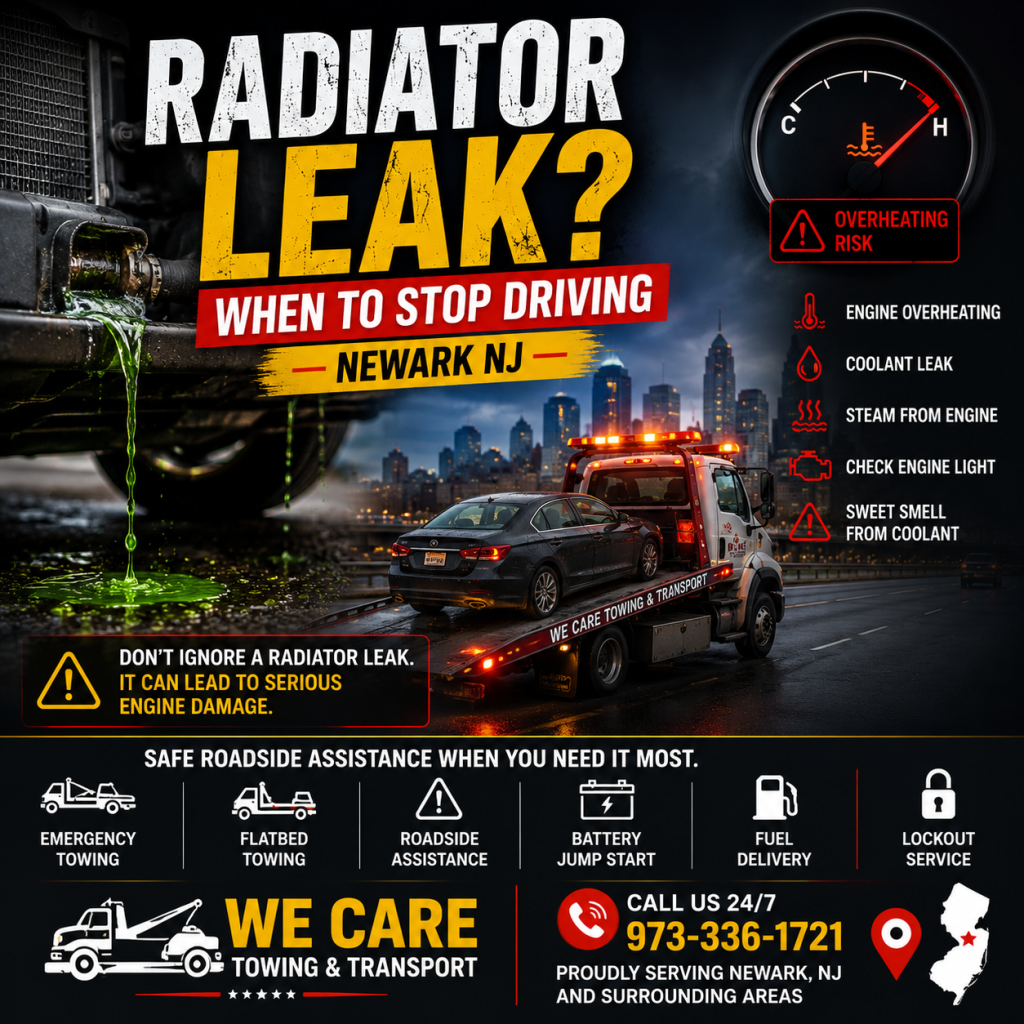
A radiator leak Newark NJ drivers notice can quickly become a serious roadside problem. The radiator is part of the vehicle’s cooling system, which helps control engine temperature during operation. When coolant escapes because of a leak, the engine may not receive the cooling it needs.
A small leak can sometimes develop into a larger problem, especially if the vehicle continues to operate while losing coolant. Drivers may notice coolant underneath the car, an overheating temperature gauge, steam, or a warning light on the dashboard.
If you notice signs of a radiator or coolant leak, the priority should be getting the vehicle to a safe location and determining whether it is safe to continue driving.
What Can Cause a Radiator Leak?
A radiator can develop a leak for several reasons. Some problems may develop gradually, while others can occur suddenly.
Possible causes include:
- Damage to the radiator
- Corrosion or deterioration
- Damaged radiator hoses
- Loose or damaged connections
- Cracks in cooling system components
- A damaged radiator cap
- Age-related wear
- Damage caused by an impact
The radiator itself may not always be the source of a coolant leak. Other cooling-system components can also allow coolant to escape.
Because the exact source may not be obvious from outside the vehicle, a professional inspection may be necessary.
What Does a Radiator Leak Look Like?
One of the most noticeable signs is fluid underneath the vehicle.
Other warning signs can include:
- Coolant pooling underneath the car
- A sweet smell around the vehicle
- Steam coming from under the hood
- Engine temperature rising
- Overheating warning light
- Low coolant warning
- Visible wet areas around hoses or radiator components
- Repeated need to add coolant
- Engine performance changes caused by overheating
The appearance of leaking fluid can vary depending on the vehicle and the type of coolant being used.
If you see fluid underneath your vehicle, do not assume that it is automatically a radiator leak. Several different fluids can leak from a vehicle.
Can a Radiator Leak Cause a Car to Overheat?
Yes, a cooling-system leak can contribute to engine overheating if the vehicle loses enough coolant.
When coolant levels become too low, the cooling system may not be able to regulate engine temperature properly.
An overheating engine should not be ignored.
Continuing to drive an overheating vehicle can potentially lead to more serious mechanical problems. If the temperature gauge moves into the overheating range or an overheating warning appears, safely pull over when possible.
Warning Signs You Should Not Ignore
A radiator or coolant leak becomes more concerning when other symptoms appear.
Watch for:
- Temperature gauge rising rapidly
- Steam coming from under the hood
- Overheating warning light
- Coolant leaking onto the ground
- Strong coolant smell
- Engine running poorly
- Burning or unusual smells
- Repeated loss of coolant
- Reduced vehicle performance
If several of these signs occur at the same time, continuing to drive may not be a safe choice.
What Should You Do If Your Car Has a Radiator Leak?
If you suspect a radiator leak, focus on safety first.
1. Safely pull over
If the vehicle is overheating or showing signs of a serious cooling-system problem, look for a safe location away from active traffic.
Use your hazard lights when appropriate.
2. Turn the engine off
If the vehicle is overheating, continuing to run the engine may make the situation worse.
Allow the vehicle to cool in a safe location.
3. Do not open a hot cooling system
A hot cooling system can contain pressurized coolant and steam.
Do not remove a radiator cap or open the cooling system while it is hot. Doing so can cause serious burns.
4. Look for visible signs of leakage from a safe position
You may be able to see coolant underneath the vehicle or around the engine compartment.
Do not place yourself in an unsafe position to inspect the vehicle, particularly beside moving traffic.
5. Decide whether professional assistance is needed
If the vehicle is overheating, repeatedly losing coolant, or cannot safely be driven, professional towing may be the better option.
Should You Drive With a Radiator Leak?
Driving with a radiator leak can be risky because the vehicle may continue losing coolant while operating.
The severity of a leak can also change. A vehicle that appears to have a small leak may lose more coolant as the engine runs and temperatures increase.
If the temperature gauge is rising, the vehicle is overheating, steam is present, or coolant is leaking significantly, continuing to drive may create additional mechanical risks.
When you are unsure whether the vehicle can safely reach a repair facility, professional towing can transport it without requiring you to continue driving.
Can You Add Coolant and Keep Driving?
Adding coolant may address a low coolant level in some situations, but it does not necessarily repair the source of a leak.
If coolant is escaping from the radiator, hose, connection, or another component, the vehicle may continue losing coolant.
If the engine is already overheating, do not simply add coolant to a hot cooling system.
Allow the vehicle to cool safely and seek professional assistance when necessary.
When Is Towing the Better Option?
Professional towing may be the safer option when a radiator leak is accompanied by overheating or other serious warning signs.
Consider arranging towing if:
- The temperature gauge is in the overheating range
- Steam is coming from under the hood
- Coolant is leaking heavily
- The vehicle repeatedly loses coolant
- The engine is running poorly
- Warning lights remain on
- The vehicle loses power
- You are unsure whether it is safe to continue driving
Towing the vehicle to a repair facility can help avoid putting additional strain on an overheating engine.
Radiator Leak in Newark NJ? Get Professional Towing Assistance
A radiator leak Newark NJ drivers experience can happen on city streets, highways, parking areas, or while traveling through busy traffic.
If your vehicle begins overheating or losing coolant, finding a safe location to stop should be the first priority.
Once you are safely away from traffic, determine whether the vehicle can be operated without creating additional risk. If it cannot, professional towing may be the better option.
We Care Towing & Transport provides towing and roadside assistance for drivers in Newark, NJ and surrounding areas.
Our services include:
- Local towing
- Emergency towing
- Flatbed towing
- Vehicle recovery
- Roadside assistance
- Battery jump starts
- Flat tire assistance
- Fuel delivery
- Lockout service
Why Choose We Care Towing & Transport?
A vehicle with a cooling-system problem may not be safe to drive, particularly when overheating or significant coolant loss is involved.
We Care Towing & Transport provides professional towing and roadside assistance for drivers in Newark, NJ and surrounding communities.
If your vehicle cannot be safely driven after developing a radiator or coolant problem, professional towing can help transport it to an appropriate location.
Final Thoughts
A radiator leak should not be ignored, especially when the vehicle begins overheating.
If you notice coolant under the vehicle, steam, a rising temperature gauge, or an overheating warning, safely pull over when possible and turn off the engine.
Never open a hot cooling system. If the vehicle cannot be safely driven or continues losing coolant, professional towing may be the safer next step.
We Care Towing & Transport provides towing and roadside assistance in Newark, NJ and surrounding areas. If your vehicle cannot be safely driven, arrange professional assistance to help move it to an appropriate location.