
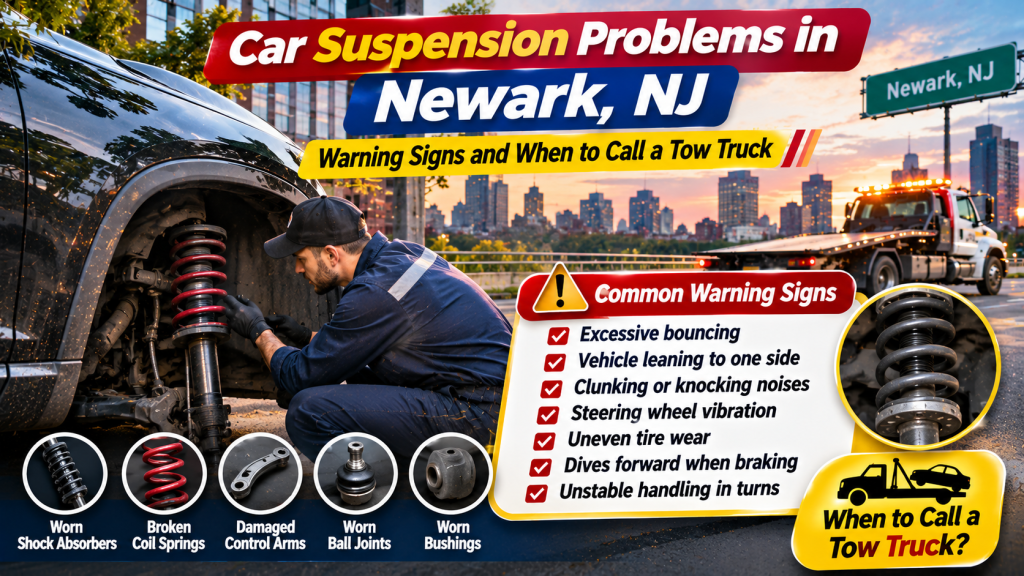
Your vehicle’s suspension system plays an important role in maintaining stability, handling, and ride comfort. It helps keep your tires in contact with the road while absorbing bumps, uneven surfaces, and other driving impacts.
However, when suspension components become worn or damaged, your vehicle may become difficult to control. You might notice unusual bouncing, uneven tire wear, strange noises, or a vehicle that leans to one side.
For drivers in Newark, NJ, suspension problems can become particularly concerning when traveling through busy streets, navigating uneven road surfaces, or driving over potholes.
Recognizing the warning signs early can help you avoid additional vehicle damage and make safer decisions.
In this guide, we explain common car suspension problems in Newark, NJ, their possible causes, symptoms to watch for, and when professional towing may be the safer option.
What Does a Car Suspension System Do?
A suspension system connects your vehicle’s wheels to its body and helps control how the vehicle responds to road conditions.
It consists of several components that work together to support the vehicle and maintain stability.
Some important suspension components include:
- Shock absorbers
- Struts
- Coil springs
- Control arms
- Ball joints
- Bushings
- Sway bars
- Suspension links
Each component has a different function. When one or more parts become worn, loose, or damaged, the vehicle may not handle normally.
A suspension problem should not be ignored simply because the vehicle can still move.
7 Common Signs of Car Suspension Problems
Suspension problems can develop gradually or happen suddenly after hitting a pothole, curb, or road obstacle.
Here are seven warning signs drivers should recognize.
1. Your Car Bounces Excessively
Does your vehicle continue bouncing after driving over a speed bump or uneven road?
Excessive bouncing may indicate worn shock absorbers or struts.
These components help control the movement of your vehicle’s suspension. When they become worn, the vehicle may continue moving up and down instead of settling quickly.
You may notice:
- Excessive bouncing over bumps
- Reduced ride stability
- Uncomfortable driving
- Increased body movement during braking
If the vehicle feels unstable or difficult to control, avoid continuing your journey until it has been inspected.
2. Your Vehicle Leans to One Side
A vehicle that appears lower on one side may have a suspension-related problem.
Possible causes include:
- A damaged coil spring
- Worn suspension components
- A broken suspension part
- Uneven vehicle loading
A broken spring can affect ride height and may create additional risks if the damaged component interferes with a tire.
Do not attempt to drive a vehicle with a visibly broken suspension spring.
3. Strange Clunking or Knocking Noises
Unusual noises coming from underneath your vehicle may indicate worn or damaged suspension components.
You might hear:
- Clunking sounds over bumps
- Knocking noises when turning
- Squeaking from the suspension area
- Rattling over uneven surfaces
Possible causes include worn bushings, loose suspension hardware, damaged ball joints, or other mechanical issues.
These sounds do not automatically identify a specific failed part. A professional inspection is necessary to determine the actual cause.
If the noises are accompanied by steering problems or unusual vehicle movement, stop driving when it is safe to do so.
4. Your Steering Wheel Vibrates
Steering wheel vibration can have several possible causes.
Some are related to tires and wheel balance, while others may involve suspension or steering components.
You may notice vibration:
- At higher driving speeds
- When driving over uneven roads
- During turns
- When braking
If vibration becomes severe or the steering wheel feels loose, arrange a professional inspection.
Avoid assuming that a simple wheel balance will fix every vibration problem.
5. Your Tires Wear Unevenly
Suspension and alignment problems can affect how your tires contact the road.
If you notice unusual tire wear, it may indicate an issue involving suspension components, wheel alignment, or tire pressure.
Common signs include:
- One side of a tire wearing faster
- Uneven tread depth
- Excessive wear on tire edges
- Unusual tire wear patterns
Uneven tire wear can reduce tire performance and may affect vehicle handling.
Have the tires and suspension inspected before the condition becomes worse.
6. Your Car Dives Forward During Braking
If the front of your vehicle dips noticeably when you apply the brakes, worn suspension components may be one possible cause.
This is sometimes called excessive brake dive.
However, braking problems can also involve the braking system itself.
If your vehicle experiences unusual movement, longer stopping distances, or reduced braking control, do not continue driving until the problem has been checked.
7. Your Vehicle Feels Unstable Around Turns
A properly functioning suspension system helps maintain vehicle stability when turning.
If your vehicle leans excessively, feels loose, or becomes difficult to control around corners, suspension or steering components may require attention.
Possible causes include worn shocks, damaged sway bar links, worn bushings, or other suspension-related problems.
If you feel that you cannot safely control the vehicle, pull over in a safe location and arrange professional assistance.
What Causes Suspension Damage?
Suspension components experience repeated stress during everyday driving.
Several factors can contribute to suspension damage.
1. Driving Over Potholes
Hitting a deep pothole can place sudden force on your tires, wheels, and suspension components.
Depending on the impact, it may damage:
- Control arms
- Ball joints
- Wheels
- Tires
- Shock absorbers
- Suspension links
If you hit a pothole and immediately notice unusual noises, steering changes, or a change in ride height, arrange an inspection.
2. Hitting a Curb
Accidentally striking a curb can affect more than your tires.
A strong impact may damage suspension or steering components and change wheel alignment.
If your vehicle starts pulling to one side after hitting a curb, avoid assuming the problem is only alignment-related.
3. Normal Wear and Tear
Suspension components gradually wear out over time.
The lifespan of these parts depends on driving conditions, vehicle design, maintenance, and usage.
Regular inspections can help identify worn components before they create more serious handling problems.
4. Carrying Excessive Weight
Consistently carrying more weight than your vehicle is designed to handle can place additional stress on the suspension.
Follow the manufacturer’s vehicle load recommendations and avoid overloading your car.
5. Poor Road Conditions
Repeated driving over rough surfaces, uneven roads, and road obstacles can increase stress on suspension components.
Drivers should reduce speed when approaching potholes and avoid sudden impacts whenever possible.
Is It Safe to Drive With Suspension Problems?
It depends on the severity of the problem.
Some minor suspension issues may not immediately prevent a vehicle from moving. However, serious suspension damage can affect steering, stability, braking performance, and tire contact with the road.
You should avoid driving if:
- A suspension spring is visibly broken.
- The vehicle is leaning significantly to one side.
- A wheel appears out of position.
- The tire is rubbing against the vehicle body.
- Steering becomes difficult or unpredictable.
- The vehicle makes severe clunking noises.
- The vehicle feels unstable or difficult to control.
If any of these conditions occur, pull over somewhere safe and arrange professional assistance.
Continuing to drive with serious suspension damage may cause additional damage and create a safety risk.
When Should You Call a Tow Truck for Suspension Problems?
Not every suspension issue requires immediate towing. However, certain symptoms indicate that moving the vehicle under its own power may be unsafe.
Consider calling a professional towing service when:
- Your vehicle has a broken coil spring.
- A wheel appears misaligned or displaced after an impact.
- The suspension makes severe knocking noises.
- Your car leans heavily to one side.
- The vehicle has difficulty maintaining a straight path.
- A tire is rubbing against the fender or body.
- You experience serious steering or handling problems.
A towing provider can help transport your vehicle to a repair facility for further inspection.
If the vehicle has significant suspension damage, flatbed towing may be an appropriate option, depending on its condition and loading requirements.
Learn more about our car towing service in Newark, NJ.
Why Flatbed Towing May Be Suitable for Suspension-Damaged Vehicles
Flatbed towing transports a vehicle on a platform rather than allowing its wheels to roll along the road during transport.
This method may be useful when:
- A suspension component is broken.
- A wheel or tire is damaged.
- The vehicle cannot be driven safely.
- There is concern about additional damage during movement.
- The vehicle needs transportation to a repair facility.
The correct loading method depends on the vehicle’s condition.
A vehicle with severe suspension damage may require specialized loading equipment or additional precautions. The towing provider should assess the situation before attempting recovery.
You can also learn more about our flatbed towing service in Newark, NJ.
How to Prevent Suspension Problems
Although suspension components naturally wear over time, proper vehicle maintenance can help identify problems early.
Here are some useful precautions.
Schedule Regular Vehicle Inspections
Ask a qualified mechanic to inspect suspension components during routine maintenance.
An inspection may help identify worn bushings, leaking shocks, damaged springs, or loose components.
Check Your Tires Regularly
Maintain the tire pressure recommended by your vehicle manufacturer.
Inspect tires for unusual wear patterns, visible damage, or uneven tread.
Drive Carefully Over Potholes
Reduce your speed when approaching potholes and uneven surfaces.
Avoid sudden steering movements when trying to avoid road obstacles, especially in traffic.
Pay Attention to Unusual Noises
Do not ignore new clunking, knocking, or squeaking sounds.
If unusual noises continue or become worse, arrange a professional inspection.
Avoid Overloading Your Vehicle
Follow the manufacturer’s recommended weight limits.
Excessive loads can place additional stress on the suspension system.
Why Choose We Care Towing & Transport in Newark, NJ?
When suspension damage makes your vehicle unsafe to drive, arranging suitable towing assistance is important.
We Care Towing & Transport serves drivers in Newark, NJ, who need vehicle towing and roadside assistance.
Whether your vehicle has experienced a suspension problem, tire damage, or another mechanical issue, it is important to communicate the condition of the vehicle before arranging transportation.
When requesting towing assistance, explain:
- What happened before the problem started.
- Whether the vehicle can move.
- Whether a wheel or tire is damaged.
- Whether the vehicle is leaning to one side.
- Whether any suspension components appear broken.
Providing these details helps the towing provider consider the appropriate equipment and loading method.
Visit We Care Towing & Transport to learn more about our towing services.
Frequently Asked Questions (FAQs)
1. Can I drive my car with a broken suspension spring?
Driving with a broken suspension spring can be dangerous. The spring may affect vehicle stability or interfere with a tire. Avoid driving and arrange professional inspection or towing.
2. What are the most common signs of bad suspension?
Common warning signs include excessive bouncing, uneven tire wear, clunking noises, vehicle leaning, steering vibration, and unstable handling.
3. Can potholes damage a car’s suspension?
Yes. A strong pothole impact can damage suspension components, wheels, tires, and alignment. Have the vehicle inspected if you notice changes after hitting a pothole.
4. Is flatbed towing better for a car with suspension damage?
Flatbed towing may be suitable because the vehicle is transported on a platform. However, the loading method must be appropriate for the specific damage and vehicle condition.
5. Why does my car make a clunking noise over bumps?
Possible causes include worn bushings, damaged ball joints, loose suspension hardware, or other mechanical problems. A qualified mechanic should inspect the vehicle to identify the actual cause.
6. Can bad suspension affect tire wear?
Yes. Worn or damaged suspension components may affect wheel alignment and tire contact with the road, potentially contributing to uneven tire wear.
7. When should I call a tow truck for suspension problems?
Call a towing provider if your vehicle has a broken spring, displaced wheel, severe suspension noise, significant leaning, or handling problems that make driving unsafe.
Final Thoughts
Your vehicle’s suspension system is essential for maintaining stability, handling, and a comfortable ride.
Ignoring warning signs such as excessive bouncing, unusual noises, uneven tire wear, or steering problems can allow a minor issue to become more serious.
If you experience significant suspension damage in Newark, NJ, avoid forcing your vehicle to continue driving.
Arrange a professional inspection and consider towing when the vehicle cannot be moved safely.
We Care Towing & Transport is here to help Newark-area drivers with their vehicle towing needs.