
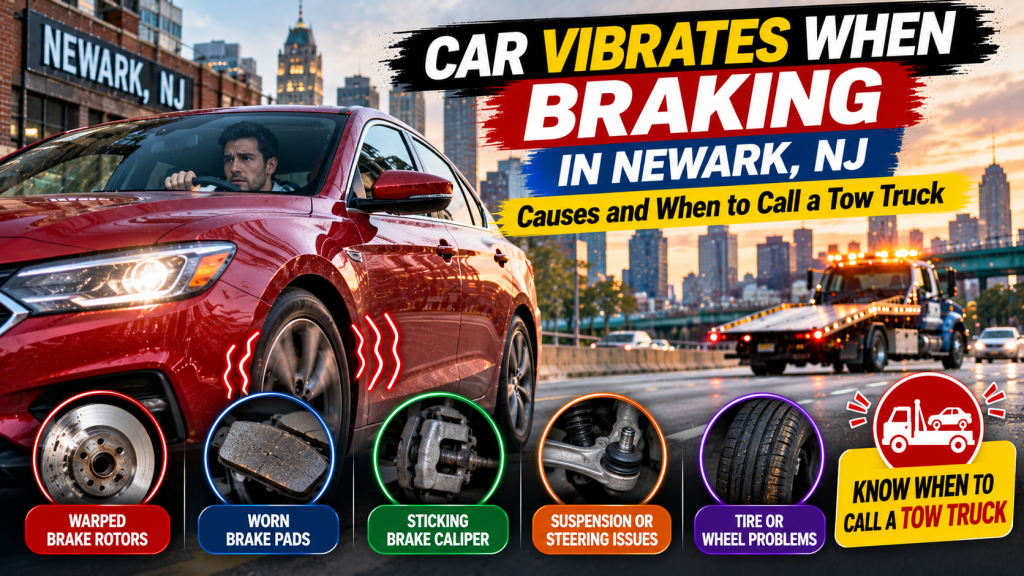
Have you ever pressed your brake pedal while driving through Newark, New Jersey, and noticed your car shaking or vibrating? Perhaps the steering wheel starts shaking, the brake pedal feels unusual, or the entire vehicle vibrates as it slows down.
A car that vibrates when braking in Newark, NJ, may have worn brake components, rotor surface problems, loose suspension parts, or another mechanical issue. While some vibrations develop gradually, others may indicate a problem that requires immediate attention.
Your braking system is one of the most important safety systems in your vehicle. Ignoring unusual vibrations can put you and other road users at risk.
In this guide, We Care Towing & Transport explains why a car may vibrate when braking, which warning signs drivers should watch for, and when professional towing may be the safest option.
Why Does My Car Vibrate When I Press the Brakes?
When you apply the brakes, the brake pads press against the brake rotors to slow down the wheels.
If the braking components are worn, uneven, damaged, or not operating correctly, you may experience vibration while slowing down.
The symptoms may include:
- Steering wheel shaking when braking.
- Brake pedal pulsing or vibrating.
- Vehicle shaking while slowing down.
- Unusual noises when applying the brakes.
- Pulling to one side during braking.
- Longer stopping distances.
- Burning smells near the wheels.
The location and timing of the vibration can help a mechanic identify possible causes. However, the symptoms alone cannot confirm which component needs repair.
7 Common Reasons Your Car Vibrates When Braking
1. Brake Rotor Surface Problems
Brake rotors are the metal discs that work with brake pads to slow your vehicle.
Over time, rotor surfaces may develop uneven wear, thickness variations, or other damage. These conditions can create changes in braking force and produce vibration when the brakes are applied.
You may notice:
- Steering wheel vibration.
- Pulsation through the brake pedal.
- Shaking that becomes more noticeable at higher speeds.
- Uneven braking performance.
Drivers sometimes describe this problem as warped rotors. However, rotor thickness variation, surface deposits, and other conditions can produce similar symptoms.
A qualified mechanic should measure and inspect the rotors before deciding whether resurfacing or replacement is appropriate.
2. Worn or Uneven Brake Pads
Brake pads gradually wear down as they are used.
If the pads become excessively worn or develop uneven contact, braking may become noisy or inconsistent.
Possible warning signs include:
- Squealing or grinding sounds.
- Vibration during braking.
- Reduced braking performance.
- A brake warning indicator on some vehicles.
Driving with severely worn brake pads can damage other braking components and compromise stopping performance.
If you hear grinding or notice that the vehicle is not stopping normally, avoid continuing to drive and arrange a professional inspection.
3. Sticking Brake Caliper
Brake calipers apply pressure to the brake pads so they contact the rotors.
If a caliper sticks or does not release correctly, one brake may remain partially applied. This can create uneven braking, excessive heat, and vibration.
Other possible symptoms include:
- Vehicle pulling to one side.
- Burning smell near a wheel.
- Uneven brake pad wear.
- A wheel becoming unusually hot.
- Reduced vehicle performance.
A sticking caliper can become a serious safety concern.
If you notice a burning smell, smoke near a wheel, or severe pulling, stop in a safe location and avoid touching hot brake components.
Professional inspection and towing may be necessary.
4. Suspension or Steering Component Problems
Brake vibration does not always originate from the brakes themselves.
Worn suspension bushings, ball joints, tie rod ends, or other steering components may contribute to shaking or instability during braking.
You might notice:
- Steering wheel movement.
- Clunking sounds.
- Uneven tire wear.
- Vehicle pulling to one side.
- Unstable handling.
If braking vibration is accompanied by loose steering or unpredictable vehicle movement, do not ignore it.
A qualified technician should inspect the steering and suspension systems along with the brakes.
5. Tire or Wheel Problems
Damaged tires, incorrect tire pressure, bent wheels, or loose wheel fasteners can contribute to vibration.
Sometimes these issues become more noticeable when braking because the vehicle’s weight shifts forward.
Warning signs may include:
- Steering wheel shaking.
- Vibration through the vehicle body.
- Uneven tire wear.
- Unusual movement at higher speeds.
A suspected loose wheel or damaged tire should be treated seriously. Do not drive the vehicle to test whether the vibration disappears.
Stop safely and arrange professional assistance.
6. Brake System Overheating
Repeated hard braking, prolonged downhill driving, or a brake component that does not release correctly may contribute to excessive brake heat.
Overheated brakes may produce unusual smells, reduced braking performance, or changes in how the pedal feels.
If you notice smoke, a strong burning smell, or reduced braking ability, stop safely and allow professional help to assess the vehicle.
Never touch the brakes, wheels, or other components to check their temperature.
Continuing to drive with an overheating brake system may increase the risk of brake failure.
7. Wheel Bearing or Hub Problems
Wheel bearings allow the wheels to rotate smoothly. When a bearing becomes worn or damaged, it may produce humming, grinding, or other unusual noises.
In some situations, a wheel bearing or hub problem may also contribute to vibration or unstable handling.
You might notice:
- Humming that changes with vehicle speed.
- Grinding noises.
- Unusual wheel vibration.
- Changes in handling.
These symptoms can overlap with tire, brake, and suspension problems.
If you suspect a wheel bearing or hub issue, arrange a professional inspection rather than continuing to drive with unusual vibration.
What Should You Do If Your Car Vibrates When Braking in Newark, NJ?
If your vehicle starts vibrating whenever you apply the brakes, take the symptoms seriously.
Step 1: Pay Attention to the Braking Behavior
Notice whether the vibration comes through the steering wheel, brake pedal, or entire vehicle.
Also pay attention to unusual noises, pulling, burning smells, and changes in stopping distance.
Do not deliberately brake hard or drive faster to reproduce the vibration.
Step 2: Reduce Speed Safely
If the vehicle remains controllable, reduce speed gradually and avoid unnecessary driving.
Leave additional space between your vehicle and the traffic ahead.
Avoid sudden maneuvers unless necessary to prevent a collision.
Step 3: Move to a Safe Location
Look for a suitable parking area or safe place away from moving traffic.
If braking performance is seriously reduced, prioritize avoiding a collision and seek emergency assistance when necessary.
Do not attempt to reach a repair shop if the vehicle cannot stop reliably.
Step 4: Avoid Risky Roadside Inspections
Do not crawl under the vehicle or touch hot brake components.
Avoid attempting to tighten wheel fasteners or repair brake parts without appropriate tools and knowledge.
A braking problem should be diagnosed by a qualified professional.
Step 5: Arrange Professional Inspection or Towing
If vibration is severe, braking performance has changed, or the vehicle pulls unexpectedly, avoid driving.
Professional towing may be the safest way to transport the vehicle to a repair facility.
Learn more about our car towing service in Newark, NJ.
Is It Safe to Drive a Car That Shakes When Braking?
Not every vibration means the brakes are about to fail. However, you should never assume that a braking problem is harmless.
Avoid driving if:
- The brake pedal feels unusually soft or sinks toward the floor.
- The vehicle takes longer to stop.
- The steering wheel shakes severely during braking.
- You hear loud grinding noises.
- The vehicle pulls strongly to one side.
- You notice smoke or a burning smell near a wheel.
- A brake warning light appears alongside abnormal braking behavior.
If your brakes are not working normally, stop in a safe location and arrange professional assistance.
Your ability to stop reliably is more important than reaching your destination.
Why Brake Problems Can Be Risky on Newark Roads
Newark drivers regularly encounter busy intersections, stop-and-go traffic, crowded commercial streets, and highway entrances.
These conditions often require frequent braking and quick responses to surrounding traffic.
A vehicle with braking vibration or reduced stopping performance may become difficult to control in an unexpected situation.
If you notice unusual brake behavior while driving around Newark, NJ, avoid unnecessary trips and have the vehicle inspected promptly.
When braking performance is compromised, professional towing is generally a safer option than attempting to drive to a repair shop.
How We Care Towing & Transport Can Help
When brake problems make your vehicle unsafe to drive, We Care Towing & Transport provides towing assistance for drivers in Newark, NJ, and surrounding areas.
A towing professional can help transport an appropriate disabled vehicle to a repair facility or another suitable destination.
The appropriate recovery method depends on your vehicle’s condition, drivetrain, and manufacturer’s requirements.
When requesting assistance, be prepared to provide:
- Your location or nearest cross street.
- Your vehicle’s make, model, and approximate year.
- Whether the steering wheel or brake pedal vibrates.
- Whether you hear grinding or squealing noises.
- Whether the vehicle pulls to one side.
- Whether the brakes feel weak or unusual.
- Whether you notice smoke or a burning smell.
This information helps the provider understand the problem and consider the appropriate recovery approach.
Learn more about available services at We Care Towing & Transport.
How to Help Prevent Brake Problems
Regular brake maintenance may help identify wear and developing problems before they become serious.
Consider these precautions:
- Follow the manufacturer’s recommended brake inspection schedule.
- Have unusual brake noises inspected promptly.
- Replace worn brake pads when recommended.
- Have rotors inspected for wear and thickness variations.
- Check tire pressure according to the owner’s manual.
- Address steering and suspension problems early.
- Avoid ignoring vibration or changes in stopping performance.
- Have the braking system checked after a significant impact.
Preventive maintenance cannot eliminate every mechanical problem, but it can help maintain reliable braking performance.
Frequently Asked Questions
1. Why does my steering wheel vibrate when braking?
Possible causes include brake rotor surface problems, uneven braking, suspension issues, or wheel-related faults. A professional inspection is necessary to identify the cause.
2. Can bad brake rotors make a car shake?
Yes. Rotor thickness variation, uneven wear, or other rotor surface problems may cause vibration when the brakes are applied.
3. Is it dangerous if my brake pedal vibrates?
Some vehicles have normal brake pedal pulsation when ABS activates during hard braking or on slippery surfaces. However, repeated or unexpected vibration during ordinary braking should be inspected.
4. Why does my car pull to one side when braking?
Possible causes include uneven brake operation, a sticking caliper, tire problems, or suspension faults. If the pulling is severe, stop driving and arrange professional assistance.
5. Should I call a tow truck if my car shakes when braking?
If the vibration is severe, braking performance is reduced, or the vehicle is unstable, professional towing may be the safest option. Do not drive a vehicle with unreliable brakes.
6. Can worn brake pads cause vibration?
Worn or uneven brake pads can contribute to braking problems and unusual noises. Other components may also be involved, so an inspection is important.
7. Where can I get towing assistance in Newark, NJ?
Visit We Care Towing & Transport to learn more about towing assistance for disabled vehicles in Newark and nearby areas.
Final Thoughts
A car that vibrates when braking may have a problem involving brake rotors, pads, calipers, suspension components, tires, or wheel bearings.
If your car vibrates when braking in Newark, NJ, pay attention to changes in steering, pedal feel, stopping distance, and vehicle stability.
Do not continue driving if your brakes are unreliable or the vehicle cannot be controlled safely.
When braking problems make your car unsafe to operate, We Care Towing & Transport can help you explore towing assistance so your vehicle can be transported for professional inspection.
Your brakes are essential for your safety. Never ignore unusual vibration or changes in braking performance.
Learn more at wecaretransportnj.com.