
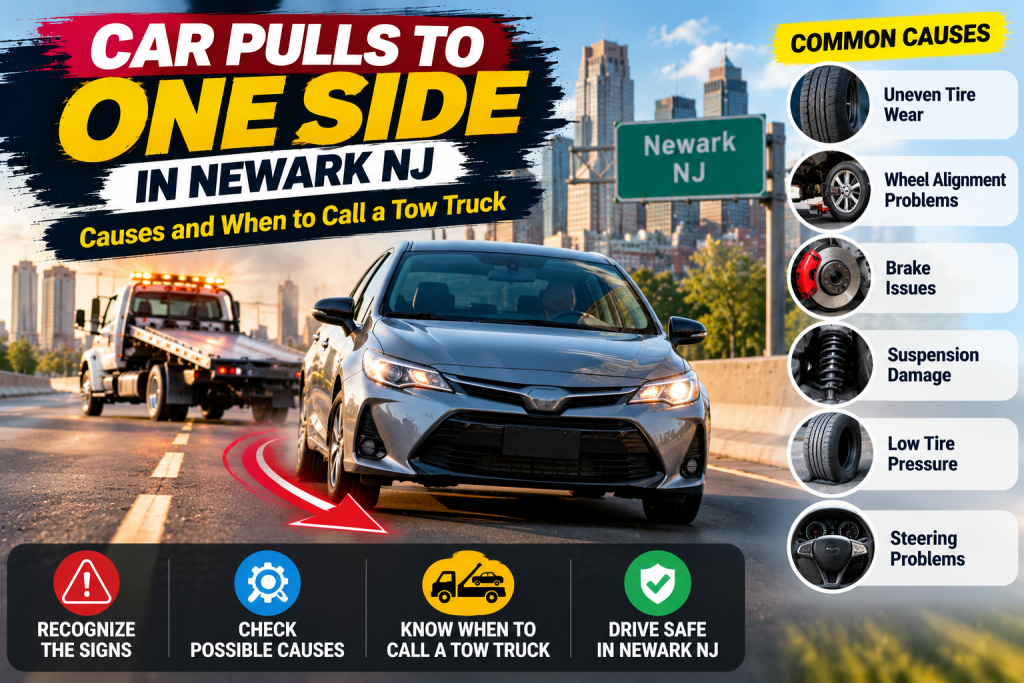
Have you ever been driving through Newark, NJ, and noticed your car pulling to the left or right even when you are trying to keep the steering wheel straight? This can make driving uncomfortable and may indicate a problem with your tires, wheel alignment, brakes, or suspension.
Sometimes a vehicle may drift slightly because of road conditions. However, if your car consistently pulls to one side on a straight, level road, it is worth investigating rather than ignoring the problem.
If your car pulls to one side in Newark NJ, understanding the possible causes can help you recognize warning signs and decide whether to visit a mechanic or arrange professional towing.
In this guide, we explain common reasons a vehicle may pull to one side, what drivers should do, and when a tow truck may be the safer option.
1. Why Does a Car Pull to One Side While Driving?
A vehicle may pull to one side for several reasons. Some causes involve tire condition, while others may affect steering, suspension, or braking.
Common possibilities include:
- Incorrect tire pressure
- Uneven tire wear
- Wheel alignment problems
- A dragging or malfunctioning brake
- Damaged suspension components
- Steering system problems
- Tire damage after hitting a pothole or curb
- Road slope or strong crosswinds
The exact cause depends on the vehicle and the symptoms. A mechanic may need to inspect the tires, brakes, steering, and suspension to identify the issue.
2. Incorrect Tire Pressure
One of the first things to consider is tire pressure.
If one tire is significantly underinflated compared with the others, the vehicle may handle differently or pull to one side.
Low tire pressure can also contribute to uneven tire wear and reduced fuel efficiency.
What Should You Check?
When it is safe to do so, inspect your tires for:
- A visibly low tire
- Uneven tire wear
- Cuts or bulges
- Obvious punctures
- Differences in tire pressure
Use a reliable tire pressure gauge and follow the recommended pressure listed on your vehicle’s tire information label or owner’s manual.
Do not rely only on how a tire looks. A tire can be underinflated without appearing completely flat.
If a tire is damaged or losing air rapidly, avoid driving on it. Arrange appropriate roadside assistance or towing if necessary.
3. Wheel Alignment Problems
Wheel alignment refers to the positioning of the wheels relative to the vehicle’s specifications.
If the alignment is incorrect, you may notice the vehicle drifting or pulling to one side. You might also see uneven tire wear or notice that the steering wheel is not centered while driving straight.
Alignment problems can develop after:
- Hitting a deep pothole
- Striking a curb
- Driving over a road obstacle
- Suspension repairs
- Normal wear or damage to related components
However, not every vehicle that pulls to one side has an alignment problem. Tire characteristics, brake issues, and other mechanical faults can produce similar symptoms.
A qualified technician can determine whether alignment adjustment or another repair is required.
For more information about tire safety, visit the NHTSA Tire Safety resource.
4. Brake Problems Can Cause a Vehicle to Pull
If your car pulls strongly to one side when you apply the brakes, the braking system may need inspection.
Possible causes include a sticking brake caliper, uneven braking force, or another brake-related fault.
Watch for these warning signs:
- The car pulls sharply when braking
- A burning smell develops near a wheel
- You hear grinding or unusual brake noises
- The brake pedal feels different
- The vehicle takes longer to stop
- A brake warning light appears
Brake problems can affect your ability to stop safely.
If the vehicle pulls sharply during braking, the pedal feels abnormal, or braking performance has changed, stop driving as soon as it is safe and arrange professional assistance.
Read our related guide to brake failure towing service in Newark NJ.
5. Suspension Damage After Hitting a Pothole or Curb
Newark drivers may encounter potholes, uneven pavement, road debris, and raised curbs. A significant impact can damage a wheel, tire, steering component, or suspension part.
Suspension damage may cause the vehicle to pull to one side or feel unstable.
Other symptoms can include:
- Clunking noises over bumps
- Uneven tire wear
- Steering that feels loose
- Excessive bouncing
- A wheel sitting at an unusual angle
- The vehicle leaning noticeably to one side
If the problem begins immediately after a strong impact, do not assume that a simple alignment adjustment will fix it.
A damaged suspension component may require repair before the vehicle can be driven safely.
If the vehicle has visible damage or steering problems, consider arranging towing to a repair shop.
6. Tire Damage or Uneven Tire Wear
Tires play an important role in how a vehicle tracks along the road.
A damaged tire, uneven tread wear, or differences between tires may contribute to pulling or unusual handling.
Check for warning signs such as:
- Uneven tread depth
- Bulges on the tire sidewall
- Cuts or exposed cords
- A tire that repeatedly loses pressure
- Vibration while driving
- Damage after striking an obstacle
Do not continue driving on a tire with a serious sidewall bulge, exposed cords, or other major damage.
A mechanic or tire professional can determine whether the tire needs replacement and whether another vehicle component has also been affected.
7. Could the Road Be Causing the Pull?
Not every slight movement toward one side indicates a mechanical problem.
Road surfaces may slope toward drainage areas, and crosswinds can influence vehicle direction. Some road surfaces also contain grooves that affect how tires track.
If the vehicle only drifts slightly on a particular road but behaves normally elsewhere, road conditions may be contributing.
However, do not assume that road slope is the cause if the pulling is strong, persistent, or accompanied by other symptoms.
If the car consistently pulls on different straight roads, have it inspected by a qualified technician.
8. What Should You Do If Your Car Starts Pulling to One Side?
If your vehicle suddenly begins pulling to one side while driving, focus on maintaining control.
Follow these precautions:
- Keep both hands on the steering wheel.
- Avoid sudden steering movements or hard braking unless needed to prevent an immediate collision.
- Reduce speed gradually if it is safe to do so.
- Move to a safe location away from moving traffic.
- Turn on your hazard lights if appropriate.
- Check for visible tire damage only when it is safe.
- Arrange professional inspection or towing if the vehicle is not safe to drive.
If steering becomes difficult or you cannot maintain control, prioritize getting out of immediate danger and contact emergency assistance when necessary.
Do not attempt roadside repairs in an active traffic lane.
9. Can You Continue Driving If Your Car Pulls to One Side?
Whether you can continue driving depends on the severity and cause of the problem.
A mild drift may have several explanations, but a sudden or strong pull can indicate a serious tire, brake, steering, or suspension issue.
Avoid driving if:
- The steering suddenly becomes difficult.
- The vehicle pulls sharply.
- A tire is flat or visibly damaged.
- You hear grinding or loud mechanical noises.
- The brakes feel abnormal.
- The vehicle becomes unstable.
- A wheel appears damaged after hitting a curb or pothole.
- Warning lights appear with unusual handling.
If you are unsure whether the vehicle is safe to drive, arrange a professional inspection rather than taking unnecessary risks.
10. When Should You Call a Tow Truck?
Not every alignment or tire issue requires towing. Some vehicles can safely be driven to a repair shop after a mechanic confirms that it is appropriate.
However, towing may be the better option when the vehicle has a serious safety problem.
Consider calling for emergency towing in Newark NJ if:
- The vehicle pulls sharply and is difficult to control.
- You suspect a brake failure.
- A tire is damaged or losing air rapidly.
- The steering system is malfunctioning.
- The vehicle has suffered suspension damage.
- You hear severe grinding or scraping.
- The car was involved in a collision.
- The vehicle cannot be driven safely.
A professional towing provider can help transport the vehicle to a repair facility for inspection.
If you need assistance, visit our car towing service in Newark NJ page.
11. Why Flatbed Towing May Be Appropriate
When a vehicle has suspected steering, suspension, tire, or brake damage, the towing method matters.
Depending on the vehicle’s condition and drivetrain, a flatbed tow truck may be an appropriate way to transport it.
Flatbed towing places the vehicle on a platform rather than requiring it to travel on its own wheels.
This may be useful when:
- A wheel is damaged.
- The steering system is not functioning properly.
- The vehicle cannot be driven safely.
- Suspension damage is suspected.
- The car has been involved in an accident.
The towing operator should assess the vehicle and determine the appropriate method of transportation.
Learn more about our flatbed towing service in Newark NJ.
12. How to Help Prevent Future Steering and Tire Problems
Regular vehicle maintenance can help identify some issues before they become serious.
Consider these maintenance practices:
- Check tire pressure regularly.
- Inspect tires for damage and uneven wear.
- Follow the tire rotation recommendations in your owner’s manual.
- Have alignment checked when symptoms appear.
- Address steering or suspension noises promptly.
- Have brakes inspected if the vehicle pulls while braking.
- Arrange an inspection after a significant pothole or curb impact.
Regular maintenance cannot prevent every problem, but it can help you identify warning signs earlier.
13. What Information Should You Give a Towing Company?
If your vehicle cannot be driven safely, provide the towing company with accurate information about the situation.
Tell the operator:
- Your exact pickup location in Newark, NJ
- Your vehicle’s make and model
- Whether the vehicle can move
- Whether the steering works normally
- Whether the brakes feel abnormal
- Whether a tire or wheel is damaged
- Whether the vehicle has been involved in an accident
- Your preferred destination, such as a repair shop
Mention any severe steering or braking problem before the tow truck arrives. This information can help the operator assess the situation and determine the equipment needed.
14. 24/7 Towing in Newark NJ for Steering and Tire Problems
A vehicle that pulls strongly to one side can be difficult to control and may not be safe to drive.
The problem could involve tires, alignment, brakes, steering, suspension, or road conditions. Because the causes vary, an accurate inspection is important.
We Care Towing & Transport provides 24/7 towing services in Newark, NJ, and surrounding areas.
Our services include car towing, flatbed towing, emergency towing, and vehicle recovery.
If your vehicle has a serious handling problem and cannot be driven safely, visit our 24/7 towing services in Newark NJ page to learn more.
Frequently Asked Questions
Why does my car pull to one side while driving?
Possible causes include incorrect tire pressure, uneven tire wear, alignment problems, brake faults, steering issues, or suspension damage. Road slope and crosswinds may also affect how a vehicle tracks.
Can low tire pressure make my car pull to one side?
Yes. Unequal tire pressure can affect handling. Check tire pressure against the manufacturer’s recommended values and have any damaged or leaking tire inspected.
Should I drive if my car pulls strongly to one side?
A strong or sudden pull may indicate a safety problem. If the steering or braking feels abnormal, pull over safely and arrange professional assistance.
Can bad wheel alignment cause a car to pull?
Yes. Incorrect wheel alignment can cause a vehicle to veer left or right on a straight, level road. However, other problems can produce similar symptoms, so proper diagnosis matters.
Can a tow truck transport a car with steering or suspension damage?
A towing provider can assess the vehicle and determine an appropriate transportation method based on its condition and equipment requirements.
Is 24/7 towing available in Newark NJ?
We Care Towing & Transport advertises 24/7 towing services in Newark, NJ, and surrounding areas. Contact the company to discuss your vehicle’s condition and towing needs.
Conclusion
If your car pulls to one side in Newark, NJ, the cause could be as simple as incorrect tire pressure or as serious as a brake, steering, or suspension problem.
Pay attention to how suddenly the pulling begins and whether it is accompanied by warning lights, tire damage, unusual noises, or braking problems. If your vehicle is difficult to control or cannot be driven safely, stop in a safe location and arrange professional assistance.
We Care Towing & Transport provides 24/7 towing services in Newark, NJ, and surrounding areas to help drivers transport vehicles that cannot safely continue driving.